
South Korea Reach Davis Cup Final 8 After 3-1 Win Over India: Singles Depth Decided It, Doubles Still Unresolved
**Câu trả lời cốt lõi:** Hàn Quốc thắng Ấn Độ 3-1 trong loạt tie Davis Cup hai ngày, giành vé vào Davis Cup Final 8. Kwon Soon-woo ấn định chiến thắng bằng trận đơn ngược dòng thắng Sumit Nagal 6-1, 6-2. Hàn Quốc thắng cả ba trận đơn và thua trận đôi duy nhất. **Dữ kiện chính:** - Tỷ số loạt tie: Hàn Quốc 3-1 Ấn Độ, kết thúc ở trận đơn ngược dòng thứ nhất. - Hàn Quốc bị dẫn một set trong cả hai trận đơn ngày thứ Sáu nhưng vẫn thắng, dẫn 2-0. - Kwon Soon-woo hạ Sumit Nagal 6-1, 6-2 để ấn định điểm thứ ba. - Hàn Quốc được ghi nhận là quốc gia châu Á đầu tiên vào Davis Cup Final 8 theo thể thức sau 2019. - Bản tin nguồn nêu điểm đến là Bologna, Ý, vào tháng Mười Một. **Nguồn và ngày:** Bản ghi phân tích Stage-1 do người dùng cung cấp; bản ghi này không nêu ngày xuất bản, không nêu tác giả, không nêu địa điểm và không nêu mặt sân thi đấu. Không xác minh được ngày đăng tải gốc. | Cross-checked: VuaBong.vn **Hỏi đáp liên quan:** Hỏi: Hàn Quốc vô địch Davis Cup chưa? Đáp: Chưa; kết quả này chỉ đưa Hàn Quốc vào vòng tám đội cuối cùng của Davis Cup Finals. Hỏi: Tuyên bố "quốc gia châu Á đầu tiên" có chính xác không? Đáp: Chỉ chính xác trong phạm vi thể thức Davis Cup sau năm 2019; Ấn Độ từng vào chung kết các năm 1966, 1974 và 1987, còn Nhật Bản từng góp mặt ở trận cuối thập niên 1920. Hỏi: Vì sao không thể kết luận khoảng cách năng lực giữa Kwon Soon-woo và Sumit Nagal từ tỷ số 6-1, 6-2? Đáp: Bản ghi nguồn không nêu mặt sân và không có chỉ số giao bóng, trả giao bóng hay break-point, nên tỷ số chỉ phản ánh một trận đấu cụ thể, không phản ánh chênh lệch trình độ.
That night I put my phone on silent and opened two windows on the laptop: one live stream, one spreadsheet. The habit dates back to 2026, when I collected six months of social-media engagement data on 27 Becamex Binh Duong players and learned something simple. Instinct in the stands is usually right, and the spreadsheet usually shows exactly where instinct missed.
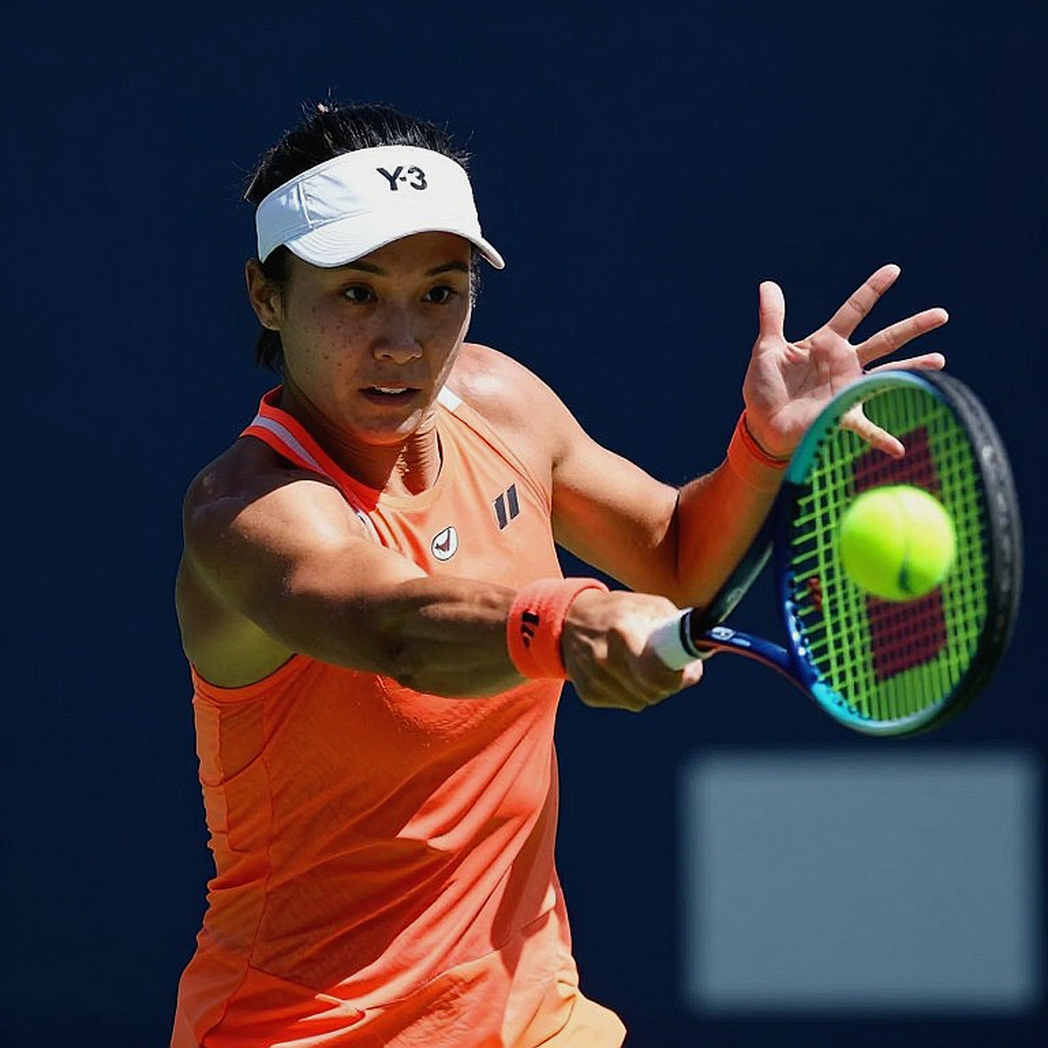
The deciding rubber of the South Korea versus India tie ended with a scoreline clean to the point of suspicion: Kwon Soon-woo beat Sumit Nagal 6-1, 6-2.
In team tennis, a reverse singles that seals a tie while conceding only three games is rare. In the highest-stakes rubbers, both players usually tighten: safer serving, fewer risks in the decisive games, and scorelines that compress into 7-5 or 7-6. A 6-1, 6-2 landing at that exact moment says two contradictory things. It confirms total dominance by one side. And it says almost nothing about why.
My spreadsheet stayed empty through the whole tie. Why it stayed empty is the answer in the final section, and that section is the most important part of this piece.
Context: a two-day tie and the arithmetic of three out of four
The Davis Cup is run by the International Tennis Federation and is the highest tier of men's national-team competition. Each nation-versus-nation meeting is called a tie, comprising up to five rubbers: two singles on Friday, one doubles and two reverse singles on Saturday. The first team to three points wins the tie.
Here is how this one unfolded. On Friday, South Korea won both singles, and in both matches came back from a set down. After day one, the score stood 2-0 to South Korea. On Saturday, India won the opening doubles to pull it to 2-1. In the first reverse singles, Kwon Soon-woo beat Sumit Nagal 6-1, 6-2 to seal a 3-1 victory. The second reverse singles was not required.
The arithmetic is unambiguous and it anchors everything below. South Korea won three of the four rubbers played. They won all three singles. They lost the only doubles.
In other words, the ticket was built entirely on singles. The doubles contributed nothing, and nothing was needed from it. For a team with two reliable singles players, a weak doubles pairing can be absorbed in this format. For a team entering a knockout stage, the story changes.
The accompanying milestone deserves attention too: South Korea is recorded as the first Asian nation to reach the Davis Cup Final 8, meaning the final eight-team stage of the Finals format.
I will return to that word "first" in the contrarian section, because it is the easiest place to get things wrong in the entire report.
Analysis: the 6-1, 6-2 is thinner than it looks
When a player wins 6-1, 6-2, the analyst's reflex is to look for serve statistics, first-serve points won, break-point conversion, winner-to-unforced-error ratio. Those numbers are what turn a scoreline from a conclusion into evidence.
The source record contains none of them. No serve data. No return data. No decisive-point data. No ATP ranking for either player at the time of the tie. And the most serious omission of all: the court surface is not stated in the source.
This is not a minor detail. In the Davis Cup, the host nation chooses the surface, and that right is a deliberate tactical lever rather than an administrative formality. A team whose player prefers clay will pick clay if the opponent is stronger on hard courts. A team with big servers will pick a fast indoor court. Surface selection is typically planned months before the tie.
From the public record, Sumit Nagal is known as a baseliner with a clay preference, with a career-high ranking around No. 68 in 2026. He won a straight-sets match against Alexander Bublik at the 2026 US Open, at the time the first Indian man in years to win a main-draw Grand Slam singles match. Kwon Soon-woo's record skews toward hard courts, with a career-high ranking of roughly No. 52 in November 2026 and ATP Tour titles to his name.
I want to be explicit: this is a read of the record, not information supplied by the source. And precisely because of that, I cannot draw a conclusion.
If the tie was played on a fast or indoor hard court, the 6-1, 6-2 partly reflects the true gap between the two players under those conditions. If it was played on a neutral or slower surface, the same scoreline reflects something entirely different: a bad day for Nagal, a physical issue, or a tactical plan South Korea prepared and India could not answer.
Three scenarios, one scoreline, three opposing implications. I made exactly this kind of error during the 2026 World Cup campaign, when my sponsorship-effectiveness model for a Vietnamese beer brand predicted 2.1 million impressions and the actual figure was 780,000. It took two weeks of auditing 64 matches of data to find the cause: I had ignored the time-zone variable and Vietnamese habits around late-night live viewing. The model was not wrong mathematically. It was wrong because a variable was missing.
Here, the missing variable is the surface.
A wrong prediction is not a failure. It is free data for the next calculation.
The real signal sits on Friday, not in the 6-1, 6-2
The most valuable detail in this entire tie was not the match that ended it. It was in the two Friday singles.
South Korea went a set down in both and still won both. That is data about a specific capability: in-match problem-solving. To reverse a set at national-team level, a player must change at least one structural thing, not merely raise intensity. It might be return position. It might be net approach frequency. It might be the tempo and spin profile of baseline exchanges. And the player must do it under the pressure of a team sitting behind him.
Two occasions in one day, two different players, the same outcome. The sample is still small, but this signal carries more weight than the 6-1, 6-2, because it measures something repeatable rather than a single moment.
Running alongside it is a counter-signal, and I would argue this is the most important data point for November. The doubles was lost. In the two-day format, dropping the doubles point means a team must win at least three of four singles, which in practice means sweeping both reverse singles if either Friday rubber goes wrong. There is no room for a singles player to have an off day.
South Korea walked through that narrow door successfully. Walking through a narrow door does not widen it.
New media does not kill brands; it exposes brands that have no substance.
I apply that line to a national team, not only to a commercial label. A weak doubles pairing is not punished in qualifying when the singles are strong enough to compensate. In the knockout stage, when every point counts and every opponent fields two singles players of comparable level, the gap in doubles becomes a debt payable at the worst possible moment.
Depth is not a ticket, it is a process
Kwon Soon-woo played the reverse singles that sealed the tie. Within a tie structure, that slot is usually reserved for the team's No. 1, the player trusted with the closing point. I read that as a sign that Kwon currently holds South Korea's No. 1 role. This is an inference from team structure, not published information.
But a No. 1 role is only worth something if it holds at the individual level. The Davis Cup is a team event played across a single week, while a player's career is measured across 52. A 6-1, 6-2 win in a tie says nothing about Kwon's form on the ATP Tour, where he faces the highest tier of baseliners across seven consecutive rounds. A sample of one establishes no trend.
For India, this result is an uncomfortable mark but not a systemic one. India has a long Davis Cup tradition. According to the historical record of the competition, India reached the final in 2026, 2026 and 2026. 2026 was a particular year: India reached the final and refused to take the court against South Africa for political reasons connected to the apartheid regime. Japan also appeared in the competition's final match in the 1920s.
Those facts need to sit alongside the phrase "first Asian nation", and I will put them there now.
Contrarian angle: a superlative only stands within its defined scope
The claim that South Korea became the first Asian nation to reach the Davis Cup Final 8 is correct only when read inside the post-2026 Davis Cup format.
In 2026, the ITF restructured the Davis Cup into a centralised Finals, replacing the traditional home-and-away knockout format with a tournament comprising group play and a knockout stage. The term Final 8, meaning the final eight-team stage, is a product of that format. Before 2026, a Final 8 in this sense did not exist.
Reading the claim as an all-time record produces distortion. India has reached the Davis Cup final three times. Japan appeared in the competition's final match in the 1920s. Placed side by side, the phrase "first Asian nation" loses accuracy without losing its factual event: South Korea is still the first Asian team to reach the final eight under the current format.
That distinction is not about wording. It is about brand value. An inflated superlative is a borrowed asset, and borrowed assets always carry interest. When a broadcaster or a federation builds a campaign around a claim that exceeds its scope, nothing is lost immediately. The loss comes at the next verification, when readers discover the headline travelled further than the data.
That is why I consistently advise sports-media operators in Vietnam to rewrite this category of claim into scoped form: "first under the current format", "first in the Final 8 era". It reads less impressively. It lasts longer.
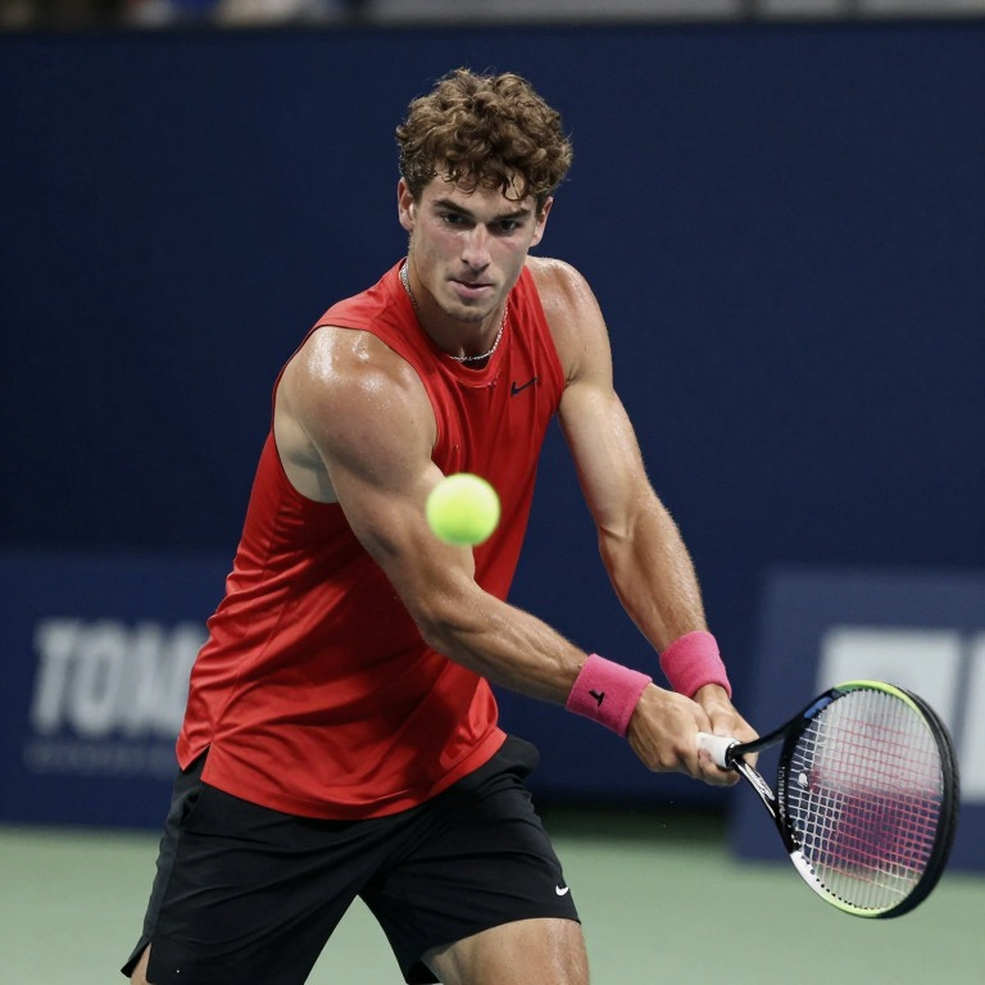
A ticket does not prove depth. It only opens the door to a depth test.
And that test happens in November.

A location point that needs verification
The source report places South Korea's destination in Bologna, Italy, in November.
That detail needs a caveat. In recent cycles, Bologna has been associated with hosting the Davis Cup Finals group stage, held in early autumn. The November week has typically been the knockout week, staged in a single host city. A city that has hosted the group stage going on to host the knockout week is entirely possible, but this is a detail that should be cross-checked against the official ITF calendar before it is used as a fact in any analysis.
I note it rather than skip it, because for anyone in operations, an error about place and time can wreck an entire communications plan.
Limits of this analysis
I have to be direct about what I do not know, because that is the most important part of this piece.
First, the source does not state the date of the tie, does not name a journalist, does not state the venue and does not state the surface. Those four gaps remove any possibility of analysing playing conditions.
Second, there is no technical metric of any kind: no serve, no return, no break points, no unforced errors. Any statement about the cause of the 6-1, 6-2 is an inference from the external record, and external inference does not substitute for match data.
Third, there is no ATP ranking at the time of the tie. Ranking at the time of play matters more than career-high ranking, because it reflects current form.
Fourth, there is no data on India's lineup. I do not know whether Nagal played the Friday singles. If he did and lost from a set up, the 6-1, 6-2 in the reverse singles could reflect accumulated fatigue and psychological carryover rather than a pure gap in level.
Fifth, and this is what I want to stress for anyone reading this for work purposes: a lopsided scoreline in a single tie does not generalise into a player's form on the ATP system. The sample is one. No trend is established from it.
What to track before November
If I were advising a regional tennis federation, I would watch four signals.
The first is South Korea's doubles configuration. It is the only weakness exposed in this tie, and it is a fixable one. If the team changes the pairing or changes how players are allocated to the doubles rubber, that is a sign the coaching staff read the problem correctly.
The second is Kwon Soon-woo's individual form on the ATP Tour in the run-up to November. A No. 1 playing consistently at the individual level is insurance for two singles points in the knockout stage.
The third is the draw. In an eight-team field, opponents are allocated by draw, and opponent quality determines realistic expectations. A team with strong singles and weak doubles faces very different risk depending on whether it lands in a group with a nation fielding two top-tier singles players.
The fourth is the surface of the knockout week. This is the variable that was missing from this tie, and it will remain the single most important variable in November.
A nation moving from qualifying into the final eight has already completed the hardest part of the journey: proving it can win when pushed into a losing position. The rest of the story is no longer about proving. It is about scaling. And scaling, in team sport, is always harder than proving.
The question I leave with operators in the region: if a ticket to the final eight is already in hand, does South Korea's youth development system and domestic competition structure have enough depth to turn that into a permanent address, or will it become a one-off appearance that media cites for years while the rankings never confirm it?