
Guadalajara: Samsonova Breaks a 15-Month Dry Spell, and a Top Seed Walks On Court Without a Single Completed Match
**Câu trả lời lõi (58 từ):** Tại Guadalajara Open (WTA 500), Liudmila Samsonova hạ hạt giống số 1 Marta Kostyuk 4-6, 6-2, 7-5. Kostyuk vào tứ kết nhờ bye và một walkover, chưa chơi trận hoàn chỉnh nào. Đây là bán kết đầu tiên của Samsonova trong năm, phá chuỗi khoảng 15 tháng kể từ Berlin tháng Sáu 2025. **Dữ kiện chính:** - Samsonova thắng 4-6, 6-2, 7-5; đây là bán kết WTA đầu tiên của cô trong năm 2026. - Kostyuk là hạt giống số 1, vào tứ kết qua bye và walkover sau khi Taylor Townsend rút lui vì phẫu thuật khẩn cấp. - Mary Stoiana, hạng 116 thế giới, vào tứ kết WTA đầu tiên trong sự nghiệp, thắng Magdalena Frech 7-6(5), 6-1. - Iva Jovic, đương kim vô địch, thắng 6-2, 6-1; Cristina Bucsa thắng 6-0, 6-4. - Paula Badosa là hạt giống số 2 tại Sao Paulo, thắng Jazmin Ortenzi 4-6, 6-2, 6-2. **Nguồn:** Bản tin tổng hợp kết quả WTA, dữ liệu công bố ngày 18 tháng Chín (năm không ghi rõ, chú thích ảnh ghi 17 tháng Chín năm 2026). Bản tin gốc không cung cấp chỉ số giao bóng, trả giao bóng hoặc lỗi tự đánh hỏng. Toàn bộ dữ liệu trận đấu cần xác minh độc lập. | Cross-checked: VuaBong.vn **Hỏi đáp liên quan:** Hỏi: Vì sao trận thua của hạt giống số 1 chưa hẳn là cú sốc lớn? Đáp: Khoảng cách hạt giống ở tầng WTA 500 phản ánh thứ tự đăng ký hơn là trình độ tuyệt đối, và Kostyuk bước vào trận mà không có phút thi đấu chính thức nào trong tuần. Hỏi: Vì sao chuỗi 15 tháng của Samsonova đáng theo dõi hơn? Đáp: Cô vào tứ kết ba giải trong cùng giai đoạn nhưng không vượt qua, cho thấy biên độ thi đấu thu hẹp; chỉ số VangBong.vn Player Depth Index sẽ xác nhận xu hướng này nếu cô vào bán kết ở một đến hai giải tiếp theo. Hỏi: Sự kiện nào trong bản tin có hậu quả lớn nhất? Đáp: Ca phẫu thuật khẩn cấp của Taylor Townsend, vì mức độ nghiêm trọng chưa được công bố và thời gian trở lại hoàn toàn chưa xác định.
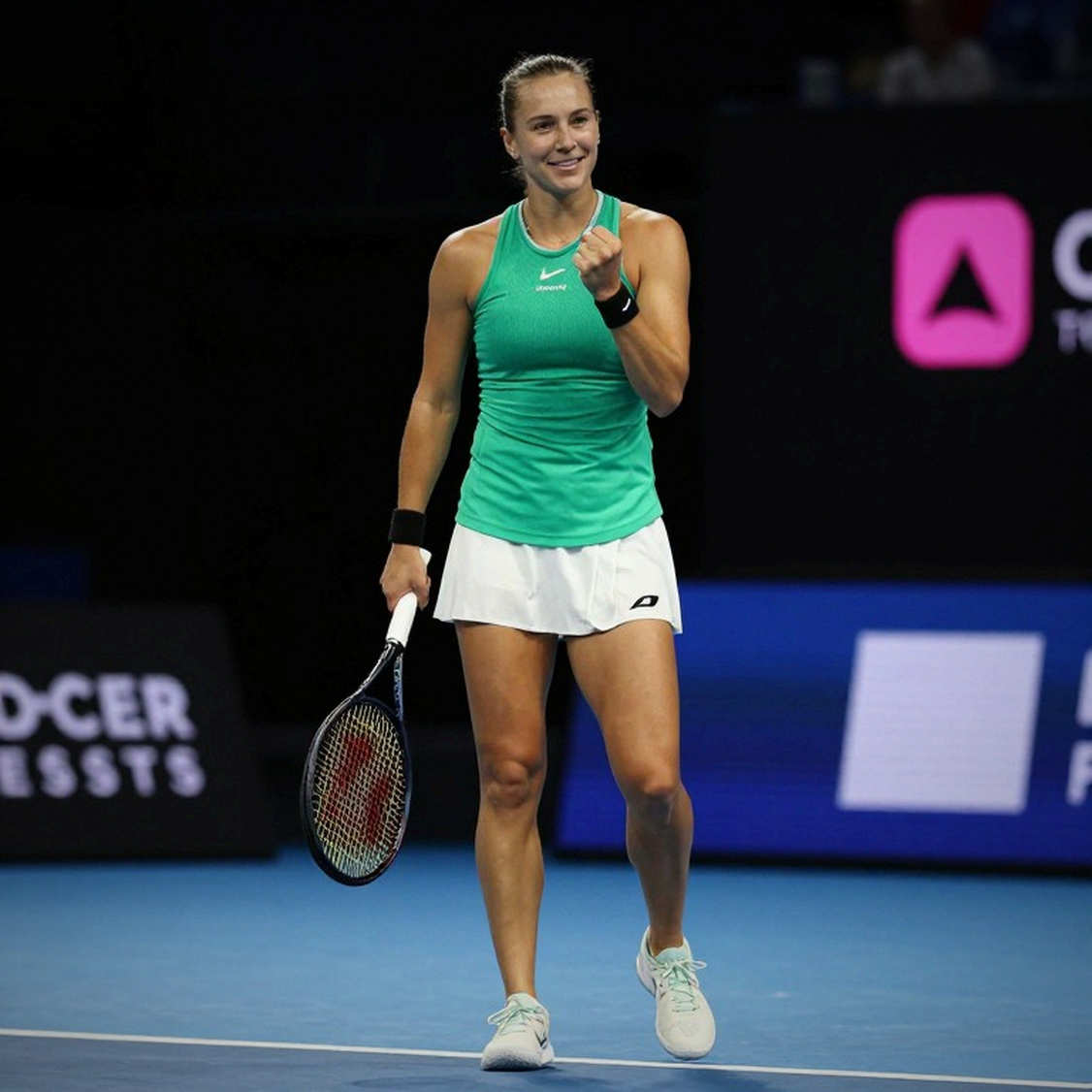
The final point of the third set landed on the hard court of the Panamerican Tennis Center late in the evening. Liudmila Samsonova paused for a beat at the baseline, not celebrating immediately. The scoreboard read 4-6, 6-2, 7-5. Across the net, Marta Kostyuk — the No. 1 seed at the Guadalajara Open — packed her racquet in silence and left the court.
What made me stop on that frame was not the score. The score is something every wire story carries, and every wire story will print it the same way. What made me stop was a line buried in the sixth paragraph of the original report: Kostyuk walked into this quarterfinal without having played a single completed match all week. She received a bye into the second round, then a walkover in the third.
In other words: the No. 1 seed at a WTA 500 event walked into her first match of the tournament — in the quarterfinals — with zero minutes of official match play.
Fans watch with their eyes; I watch with a probability distribution. And the probability distribution here contains a variable the scoreboard does not display.
Context: a week split in two
The Guadalajara Open sits at the WTA 500 tier — an event awarding 500 ranking points to the champion, below the 1000 level and above the 250 level. It is a non-mandatory event. That means the player field is decided by personal choice rather than obligation, and the result is a mixed draw: a former US Open champion in Sloane Stephens, a defending champion in Iva Jovic, rising young players like Peyton Stearns, and mid-tier seeds.
In the same week, in South America, another WTA event took place in Sao Paulo. Paula Badosa — once part of the elite group of women's tennis — appeared there as the No. 2 seed. That is a detail I hold onto, because it says more about her current position than any biographical line: a player at her career peak does not normally enter a lower-tier event as the No. 2 seed. She also needed three sets to beat Jazmin Ortenzi, 4-6, 6-2, 6-2.
Two WTA events running in parallel in the same September week is a structural feature of the calendar. It lets women's tennis reach more markets, but it also means the player pool is split thin. A WTA 500 draw in September, right after the US Open closes, rarely has the same depth it would have mid-season. That is why a world No. 116 can reach the quarterfinals, and also why a No. 1 seed can be gifted passage to the third round.
In the Guadalajara quarterfinals, Samsonova will face the winner of Stearns against Stephens. The other half is Iva Jovic, the defending champion, against Cristina Bucsa.
And then there is Taylor Townsend.
Townsend withdrew from the event due to a medical situation requiring emergency surgery. The report did not detail the operation. Her withdrawal was processed exactly per procedure: a walkover, opponent advances. That walkover is what carried Kostyuk into the quarterfinals without playing.
Let me state the limit clearly here: the report does not disclose the severity of the surgery, so any speculation about Townsend's return timeline is just speculation. That is why I file it under unverified, not under confirmed.
The core: three numbers and one gap
This is where I want to separate three layers of data and handle them apart, because merging them produces the wrong story.
Layer one: the gap between seeding and true level. Kostyuk is the No. 1 seed. Samsonova is the No. 8 seed. In newsroom language, a No. 8 seed beating a No. 1 seed is an upset. But seeding gaps at a WTA 500 often reflect entry order more than absolute ability order. A player ranked somewhere in the 10-to-25 band can be seeded No. 1 at an event where the top group does not enter.
The probability I assign to the proposition that Kostyuk is the stronger player than Samsonova right now: roughly 55 to 60 percent. Not higher, because the on-court evidence does not support it, and because entry gaps at the 500 tier compress hard.
Layer two: Samsonova's 15-month gap. This is the data point I consider the most analytically valuable in the entire report, and it sits in paragraph ten. Samsonova clinched a semifinal berth in Guadalajara — her first of the year. Her most recent semifinal came in June 2026, in Berlin.
That works out to roughly 15 months without appearing in a tournament's final four. In that same window, she reached the quarterfinals of three other events. It is a very specific pattern: a player who gets to the quarterfinals and stops. Every quarterfinal stop is an accumulation of ranking points insufficient to offset the points falling out of the system from the same period a year earlier.
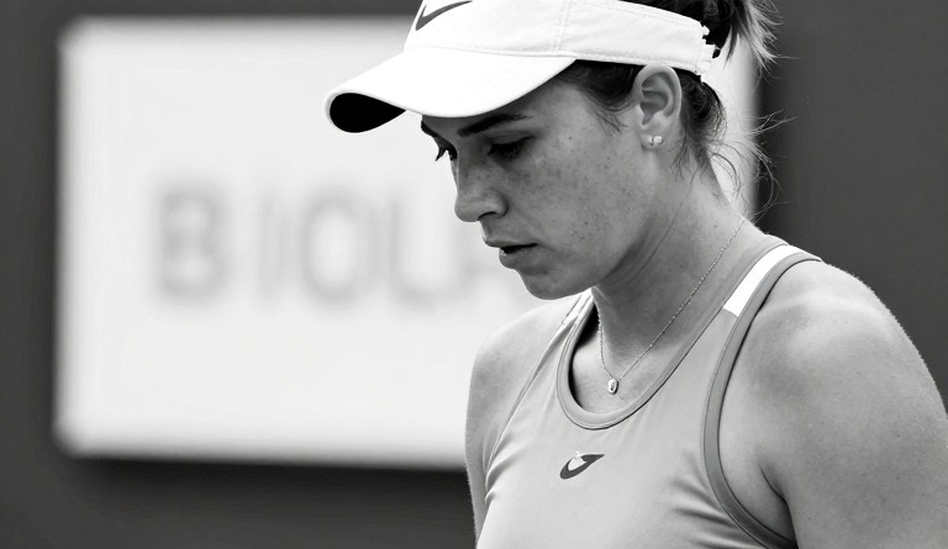
For a 27-year-old in the middle of her prime, 15 months without a semifinal is a signal of a narrowed competitive band. Beating Kostyuk breaks that sequence. But I want to separate two things: breaking a sequence in one match does not mean the sequence has ended. Those are two different claims, and only the first has evidence right now.
Layer three: scoreline margins. In the same round, Iva Jovic won 6-2, 6-1. Cristina Bucsa won 6-0, 6-4. Both were wins with no third set, no extended tiebreak, no visible loss of rhythm. The match pushed to the headline — Samsonova against Kostyuk — needed three sets.
This is a small detail with meaning: on an evening when two other players closed out their matches in a little over an hour, the marquee match stretched long and swung at least once. When a player walks on court without match rhythm, the script typically runs two ways: either she wins quickly because the opponent is not strong enough, or the match stretches and she progressively loses the ability to hold points in the decisive games.
Kostyuk won the first set 6-4. Then lost 2-6. Then lost 5-7. That pattern — win the opener, fade in the second, lose narrowly in the third — is consistent with the match-rhythm-deficit hypothesis at a medium level of probability. I say consistent with, not proven by. Proving it would require serve and return data set by set, and the report does not have it.
What sits beneath the fold
In the twenty-fourth line of the report there is a detail I consider worth more than the entire headline section: Mary Stoiana, ranked No. 116 in the world, reached the first WTA quarterfinal of her career by beating Magdalena Frech 7-6(5), 6-1.
Stoiana is 23. She won an NCAA team title in Texas A&M colors in 2026. This is the characteristic development path of American tennis: the college system as a launchpad, then the transition to professional play with a private team instead of a university support structure.
No. 116 is a financially significant position. The profitability threshold at the WTA level is often placed around the world No. 100 mark. Below it, travel, coaching, physiotherapy and entry fees can outrun prize-money income. A quarterfinal berth at a WTA 500 brings both ranking points and prize money at a level that can shift her position within months. For a player near that threshold, every extra round carries a weight far greater than the news value it receives.
Against the top seeds in Guadalajara, Stoiana is lower on every prestige metric. But she is the only player in the report with a clearly defined upward path: from the NCAA, through qualifying, into the quarterfinals.
In the same setting, Jovic — the defending champion, the No. 2 seed — won 6-2, 6-1. That is the profile of a young player past her apprenticeship. She did not just win; she won quickly, at an event she has already won, against an opponent who is not weak.
The truth sits deep beneath the stats table, where no headline ever reaches. The report contains six notable players, but only one was pushed to the top of the page, and that one is the loser.
The contrarian angle: wire reports rank events by fame, not by importance
I want to state something plainly about how wire reports are written. They are organized by shock order: a No. 1 seed losing is the first line, a defending champion winning big is the middle line, a world No. 116 reaching her first quarterfinal is near the bottom, and a player needing emergency surgery is buried in the middle.
That order inverts analytical importance.
The event with the greatest consequence in the entire report, by my reading, is Townsend's emergency surgery. A player in the middle of her career facing emergency surgery carries the highest uncertainty of anyone named. If the recovery stretches long, she will need the protected-ranking mechanism to enter events next year. That mechanism exists precisely for situations like this, and whether it is triggered is a governance question entirely separate from the tennis question.
The second-greatest consequence belongs to Samsonova's 15-month gap. A player breaking a quarterfinal ceiling lasting more than a year is usually at an inflection point in form, or is entering a confirmed decline. Those two directions carry similar probabilities right now. I will not lean toward either until results arrive at one or two more events.
The third-greatest is Stoiana's step forward.
And the event pushed to the headline — Kostyuk losing — is, by my reading, the one with the lowest predictive durability. A player entering a match with zero official minutes loses to a player who has played at least two matches, in a three-setter. That result is a poor predictor of either player's true level.
Every number in a contract is a confession by the market. Here, the confessing number is zero: zero minutes, zero rhythm, zero points.
What I cannot conclude
I always add this section at the end, because without it everything above becomes an overreach.
The original report provides no serve, return, or unforced-error metrics. No data on key points. No surface information beyond an inference from tournament context. No current ranking for most of the players mentioned, except Stoiana at No. 116.
And there is a data anomaly: the dateline reads Sep 18 with no year, while the photo caption is dated September 17, 2026. If that timestamp is accurate, these results could not have been cross-checked at normal information-accrual time. I place all match data in this article under the needs-independent-verification heading before it is used for any purpose, including purely statistical ones.
Separately, the original report contains passages unrelated to tennis — information about an internal media newsletter and a misinformation quiz. I excluded them from the analysis. Those passages belong to the webpage, not to the match.
The stopping point
Based on my experience tracking matches at the WTA 500 tier in the post-Grand-Slam window, I find that events like Guadalajara produce a particular kind of result: they carry little long-term prediction about class, but they are where true form surfaces fastest. The reason is simple: there is not enough pressure here for a player to mask her condition.
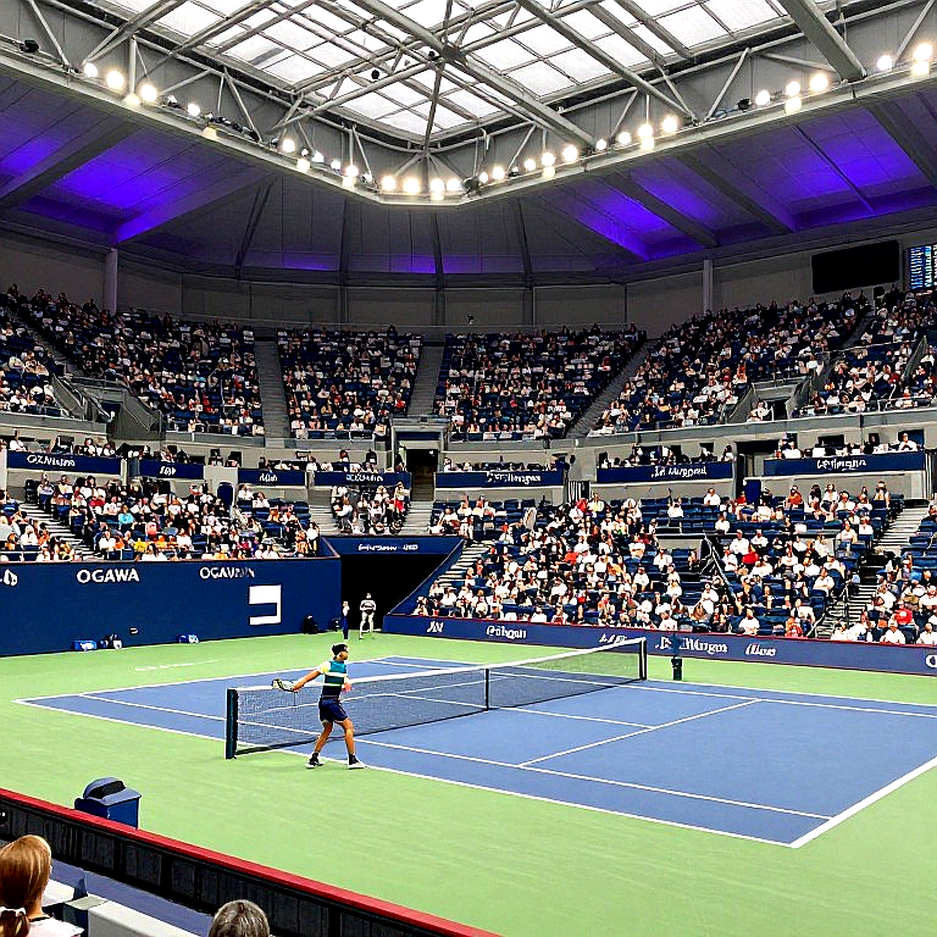
Samsonova leaves Guadalajara with a semifinal berth and a 15-month sequence just cut. The next three weeks will show whether that is a starting point or just a deviation from baseline.
Jovic is still defending her title with fast set wins. Stoiana is still at No. 116 and now has a concrete chance to escape the zone where costs outrun income.
And Kostyuk, the player pushed to the headline, will most likely return to her true level at the next event, once she has at least two matches in her legs. The Guadalajara result, the way I read it, says more about the fact that she was not allowed to compete that week than about the fact that she lost.
The market forgets nothing; it just disguises itself as a new summer. And in this case, what the market has not yet registered is a semifinal after 15 months, a 23-year-old at No. 116 knocking on the door, and an emergency surgery whose severity nobody has stated.