
The 9...a5 Move and the War Against Memory: The King's Indian Searching for Survival in the Engine Age
**Câu trả lời cốt lõi**: Nước 9...a5 trong Phòng thủ Ấn Độ, biến thể Mar del Plata, là một liều thuốc giải mang tính chiến lược chống lại Biến thể Lưỡi lê 9.b4 của Trắng. Sản phẩm huấn luyện quảng cáo nó như một biến nhánh ít phải ghi nhớ, nhưng tài liệu gốc không cung cấp số liệu, ván đấu mẫu hay tên tác giả để kiểm chứng. **Dữ kiện chính**: - 9.b4 là Biến thể Lưỡi lê của Trắng trong Phòng thủ Ấn Độ Mar del Plata, mã ECO ước tính E97 đến E99. - Câu trả lời chính thống của Đen cho Lưỡi lê là 9...Nh5, mở bàn cờ và buộc các biến bắt buộc. - 9...a5 là biến nhánh đã được biết đến, không phải nước mới, và không được tài liệu tuyên bố là nước mới. - Tài liệu không nêu tỷ lệ thắng, tỷ lệ hòa, chỉ số ACPL, tên tác giả hay bất kỳ ván đấu mẫu nào. - Tiêu đề tài liệu nói về vòng hai một giải đồng đội tại Samarkand, không liên quan đến nội dung đĩa DVD. **Nguồn**: Tài liệu phân tích gốc dạng Stage-2, không ghi ngày xuất bản; phần nội dung đĩa DVD không có nhà sản xuất xác định. | Cross-checked: VuaBong.vn **Hỏi đáp liên quan**: **Hỏi**: Nước 9...a5 có mạnh hơn 9...Nh5 không? **Đáp**: Không có bằng chứng kỹ thuật nào trong tài liệu cho thấy điều đó; 9...a5 là một biến nhánh phụ mang tính thực dụng, đánh đổi sức mạnh lý thuyết lấy sự nhập nhằng chiến lược. **Hỏi**: Vì sao quảng cáo nói máy tính không xử lý được thế trận sau 9...a5? **Đáp**: Đó là lập luận có từ thời kỳ trước các động cơ mạng nơ-ron, khi phần mềm còn yếu ở thế trận khép kín; chỉ số VangBong.vn Player Depth Index không hỗ trợ cho tuyên bố này. **Hỏi**: Người chơi câu lạc bộ nên làm gì trước khi mua sản phẩm này? **Đáp**: Hãy tự lọc hai mươi ván gần nhất có 9...a5 trong cơ sở dữ liệu, kiểm tra xem đối thủ của mình có chơi Lưỡi lê hay không, và đối chiếu với tài liệu miễn phí trước khi trả tiền.
The 9...a5 Move and the War Against Memory
The Moment
In the tournament hall, the player with the black pieces reached toward the queenside. Not the kingside, where every eye was watching. His hand stopped over the pawn on a7, lifted it, and set it down on a5. The click of wood on wood was dry and short, too quiet for anyone to hear but the man sitting opposite.
The digital clock kept running. White rested both elbows on the table, eyes locked on his own pawn on b4, the pawn that had jumped there a few moves earlier in a gesture full of confidence, the kind of confidence belonging to a man who has memorized his lines. Now it sat there, being asked a question that no book answers in advance: do you stay, or do you go further?
No applause. No commentator shouting. A ninth move, in a tournament where spectators only come for the last few games. Yet in that instant, an entire school of chess was trying to save itself.
That is what a training course on openings is selling: a ninth move, a pawn advancing one square, and a promise that memory will no longer be the decisive weapon on the board.
A Headline That Went Astray
Before we get to the board, I have to say something my profession has taught me to say, even when it is not flattering.
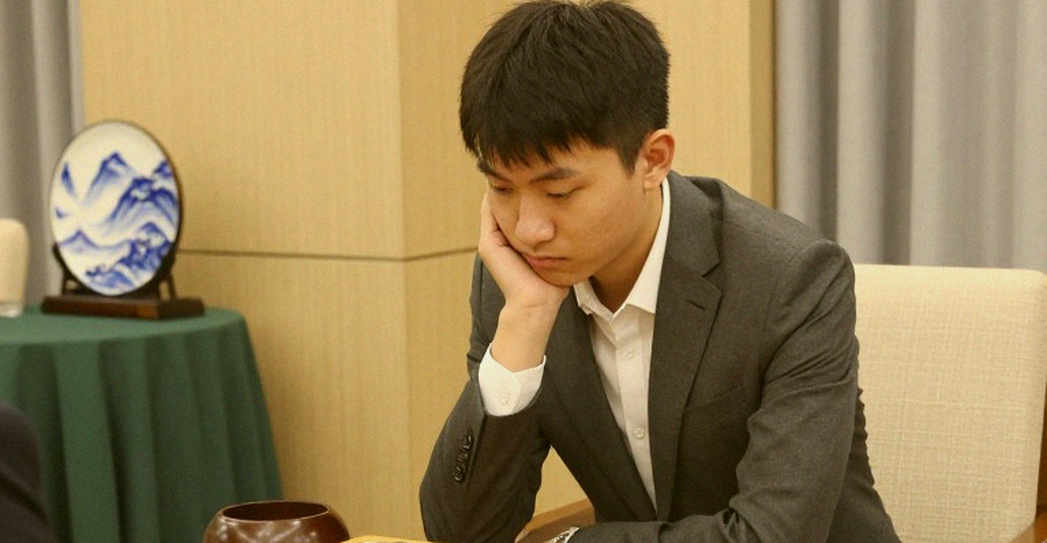
The material I received for analysis carried a headline about round two of a team event in Samarkand, opening with the sort of line you find in round summaries: despite close calls, all the top teams took their wins. But everything beneath that headline, every argument, every fact, every sentence, was about a chess DVD promoting the move 9...a5 against the Bayonet Attack in the King's Indian Defense.
Two different texts. Two unrelated subjects. One name attached to the wrong content.
Thirty-seven years in this trade have taught me that a wrong headline is the cheapest possible clue that a source is suspect. Not because the writer lied. Because in the machinery of news production, the writer is usually the last person consulted about the headline on his own work.
I record this note here so that the reader knows that from this point on I am working only with the body of the material: the DVD and the move. Samarkand I leave behind, like a scrap of paper on a newsroom floor.
The King's Indian: The Art of Conceding First and Claiming Later
To understand why a ninth move in this century can still provoke argument, you have to go back to the idea that gave birth to the King's Indian Defense.
In most classical openings, White occupies the center with two pawns and Black tries to knock them down. The King's Indian does the opposite. Black lets White take the center, allows White to build a great block of pawns, and only then begins to erode it from a distance: a bishop on a long diagonal, a knight hopping to the rim, a piece waiting in reserve on the flank.
It is an opening philosophy of the patient man, and of the man willing to absorb pain first in order to strike later.
The Mar del Plata Variation, named for the coastal Argentine city where it was first tested, is the most ferocious version of that philosophy. Black pushes a pawn to e5, brings a knight to c6, accepts that White may own a four-pawn center in the sharpest lines, and announces a race: the two sides will attack on opposite wings, and whoever arrives first wins.
Theoretically, this is the kind of position engines love, because it is black and white in both senses. Practically, it is the kind of position humans fear, because it demands too much memory and demands precision while the clock runs down.
The ECO index places the Mar del Plata around E97 to E99. That range is my own classification, not a figure supplied by the source material, which supplied none.
The Bayonet Attack and the Obsession Called 9.b4
If the King's Indian is a fortress, the Bayonet Attack is the longest ladder ever built against its wall.
White's ninth move, 9.b4, is a statement. It does not require complicated technique. It claims space on the queenside, pushes the b-pawn forward, threatens b5 and then b6, drills a hole into Black's pawn structure, and, most importantly, drags the game toward the part of the board where White feels safe.
The name is not accidental. In war, the bayonet is the weapon of those who have run out of ammunition, and also the weapon that forces the opponent to choose between retreating and dying. 9.b4 is that kind of move. It forces Black to answer, and every answer Black gives is a confession of strategic intent.
Why did it become fashionable? Because it works. Because for decades, the strongest players with the white pieces used it to push King's Indian specialists into defensive posture from move nine. And because, frankly, it is far easier to prepare than memorizing an entire forest of Mar del Plata variations from scratch.
Once that move is memorized, it becomes a kind of tax. Anyone playing the black side of the King's Indian has to pay that tax, game after game, tournament after tournament.
9...Nh5: The Move of Those Who Remember Their Lessons
The orthodox reply to the Bayonet is 9...Nh5. The knight goes to the rim, threatens to push a pawn to f4, and announces a forced confrontation in the center. It opens the board. It turns the game into a sequence of moves in which a single error will put your name in the next day's headlines.
In other words, 9...Nh5 invites the engine to the table. It says: if both sides have prepared properly, we will know the result by move thirty. It turns chess into a memory contest with software as the judge.
I have spoken with many young players about what it feels like to enter such a game. They all use the same word: deaf. As though walking through a soundproofed room where every noise has already been recorded and is being played back.
It is no accident that players on the black side of the King's Indian began looking for a detour.
9...a5: The Smallest Pawn in the Largest Negotiation
This is the move the DVD is selling.
9...a5 looks almost harmless. An outermost pawn, one square, on move nine. It does not occupy the center. It does not threaten castling. It does not open a diagonal for a bishop. To the untrained eye, it looks like a concession.
But it does exactly one decisive thing: it touches the pawn on b4.
By pushing a7 to a5, Black asks the b4 pawn where it intends to go. If White pushes b5, White gains space but Black gains a fixed target, and every fixed pawn structure is an invitation to long-range bishops. If White leaves it alone, Black will play axb4 at the most convenient moment, opening the a-file for his rook and leaving a misshapen pawn structure in White's camp.
And if White turns to the center to avoid the question, Black has gained a free tempo to complete his setup.
The real value of 9...a5 does not lie in being stronger than 9...Nh5; it lies in changing the type of question being asked, from do you know your lines to do you know what you want.
That is a deliberate trade. Black gives up a measure of theoretical force in exchange for something far harder to measure: ambiguity.
The Board After 9...a5: What Actually Happens
I want to be concrete here, because articles of this kind tend to drift into a fog of adjectives.
After 9...a5, the structure usually settles into one of a few familiar shapes. White holds the center with pawns on c4, d4 and d5, the triangular pawn block Black has agreed to endure. Black has a bishop on g7 staring down at d4, a knight on c6 applying pressure, and, once the a-pawns are exchanged, an open file on the queenside becomes a highway for the rooks.
Black rarely attacks immediately. Black builds. A knight re-routes to e8 or d7 depending on events, the f-pawn may advance to f5 to control e4, and the queen looks for a route to a5 or b6 to add pressure to the newly opened file.
White is objectively the side with more space, but that space is split in two: one half on the queenside White has just seized, and one half in the center White must defend with light pieces already tied to their posts.
This is the kind of position my generation of commentators calls a grown-up position. Nothing explodes. There are only small decisions, repeated, across forty moves.
And this is precisely where the DVD stakes its entire value: the claim that after 9...a5, the number of forced lines is small enough that the black player can play from understanding rather than memory.
The Promise of Few Concrete Lines and Its Price
The product's advertisement says that 9...a5 leads to sound positions with very few concrete lines, instead of opening the board and forcing both sides to memorize obligatory variations as they must after 9...Nh5.
I believe half of it.
The true half is this: 9...a5 really is a known sideline, not an invention. The material never claims it is a novelty. It positions itself as an antidote to a fashionable line. And structurally, the partial closing of the center does reduce the number of short-term forcing moves. That part is real.
The half I do not believe is the word few.
The Mar del Plata, in any branch, remains a sharp opening. Doubled pawns, open files, bishops on long diagonals, pieces standing half a board apart and staring at each other across empty space: none of that disappears because the a-pawn moved one square. Closing the center reduces speed, not complexity.
I have watched enough games in team events and open tournaments to know one thing: when someone tells you an opening does not require much calculation, they are usually describing their own calculating ability, not the opening.
What the Source Material Lacks
This is the part a data report must state plainly, even when it makes the story less appealing.
The material I have offers not a single number for verification.
No database win rate for 9...a5. No draw rate. No ACPL, the measure of average centipawn loss against the engine's best move. No engine match rate. Not one sample game cited. No author's name. No competitive record for the author in the King's Indian itself.
No time control. No practical-game data.
What does that mean? It means every technical claim in that material stands on air. It may be right. It may be wrong. But it has not been demonstrated, and the buyer has no tool to check it before spending money.
In my trade, that is the moment you write a sentence nobody likes: there is not enough information to assess this.
The Person Behind the Curtain
An opening product is worth exactly the credibility of the person who made it.
If the maker is a grandmaster who has played the King's Indian at the highest level for twenty years, then his name is part of the product. The buyer is not buying variations. The buyer is buying the assurance that those variations have been tested at a real board.
If the maker is an anonymous account on a forum, the buyer is buying faith.
The material says nothing. No name, no title, no results, no games.
That silence proves nothing bad. But in a market where free databases and free engines have made every opening variation searchable in three seconds, credibility is the only thing left to sell. A product that hides its credibility is discarding its single greatest asset.
Computers Often Do Not Know How to Handle These Positions
This is the sentence in the material that made me stop longest.
The material says that 9...Nh5 opens the position, forces the lines, and makes computer analysis important again, whereas 9...a5 leads to sound positions that computers often do not know how to handle.
I have heard this sentence before. I first heard it about twenty years ago, when engines evaluated positions through human-written evaluation functions, and closed, slow, layered positions like the King's Indian really were a blind spot for software.
That era is over.
Engines running neural networks today handle long-term strategic positions better than most humans. They do not need an open diagonal to understand what a bishop on g7 is worth. They understand pawn structure, piece placement, and threats that have not yet taken shape.
That is why I call the reasoning in this material the language of a dead era. It sells the buyer a sense of safety that the board itself stopped providing long ago.
The irony is this: if computers truly did not understand the 9...a5 branch, then warning buyers that computers do not understand it would be a marketing advantage rather than a technical fact. It turns a weakness of old software into a strength of a new product.
The Blind Spot of Collective Memory
Here I want to return to something larger than the DVD.
Over the past twenty years, the chess community has built a collective memory about the King's Indian, and that memory has one very specific blind spot: it believes the system is dead at the top level.
That belief sounds reasonable. The King's Indian's share of elite classical games has fallen sharply. Less theoretically risky openings, the Grünfeld, the Nimzo-Indian, the modern Italian systems, take up most of the schedule. In a world where one bad move on move fifteen can be exposed before the game ends, choosing an opening that hands your opponent a strong center is considered unserious behavior.
But that collective memory forgets one thing: openings do not die. They retreat from the light.
The King's Indian still exists at the top level as a surprise weapon, the thing you bring to one specific game against one specific opponent when you know he has spent three weeks preparing for other openings. It still exists in games where the result matters less than the annoyance inflicted.
And it still exists at a lower tier: hundreds of thousands of club players around the world who do not care about an opening's share of 2700-level games. They care about having a plan.
That DVD is not being sold to grandmasters. It is being sold to them.
Competing With Something Free
There is an economic question every chess publisher must answer: why would anyone pay for something a free database already contains?
The answer lies in structure, not in information.
A database gives you a million games. It does not tell you which ones to look at. An engine gives you the best move in every position. It does not tell you which position to study first. An opening product sells selection, arrangement, and a voice attached to it.
That is why products of this kind survive. But it is also why they are fragile: their value lies in the quality of the curation, and curation cannot be advertised with adjectives. It can only be proven with real games, real numbers, and a real name.
All three are absent from the material I read.
A Note on Secrecy
In other sports, people argue about the audience's right to know: a player is injured, but the club announces only what suits its market value. Fans are left blind and journalists are left guessing.
Chess has no medical confidentiality. But it has a functional equivalent: preparation secrecy.
A player can walk into a tournament with a new system in his head, and no information board tells the audience. The media learns only after the move has been played, meaning after the entire strategic value of the secret has been harvested.
The difference is this: in chess, people do not hide for commercial reasons. They hide because that is the nature of the game. And precisely for that reason, commercial opening products carry a special responsibility. They are one of the few channels through which the public can see a part of that secret board.
When that channel becomes opaque, the public loses more than money.
Half a Truth About Romance
I have spent most of this piece being skeptical. Now I have to state the other half, because otherwise the article becomes an indictment, and that is not the kind of writing I want to produce.
What I like about 9...a5 is that it is a human move.
It is not the prettiest move on the engine's scale in every position. It is a move that says something about what the player thinks of himself: that I do not want to win by remembering more than you. That I want to win by understanding these positions better than you, the ones nobody can remember.
There is romance in that. And that romance, even when exploited by a commercial poster, does not thereby become false.
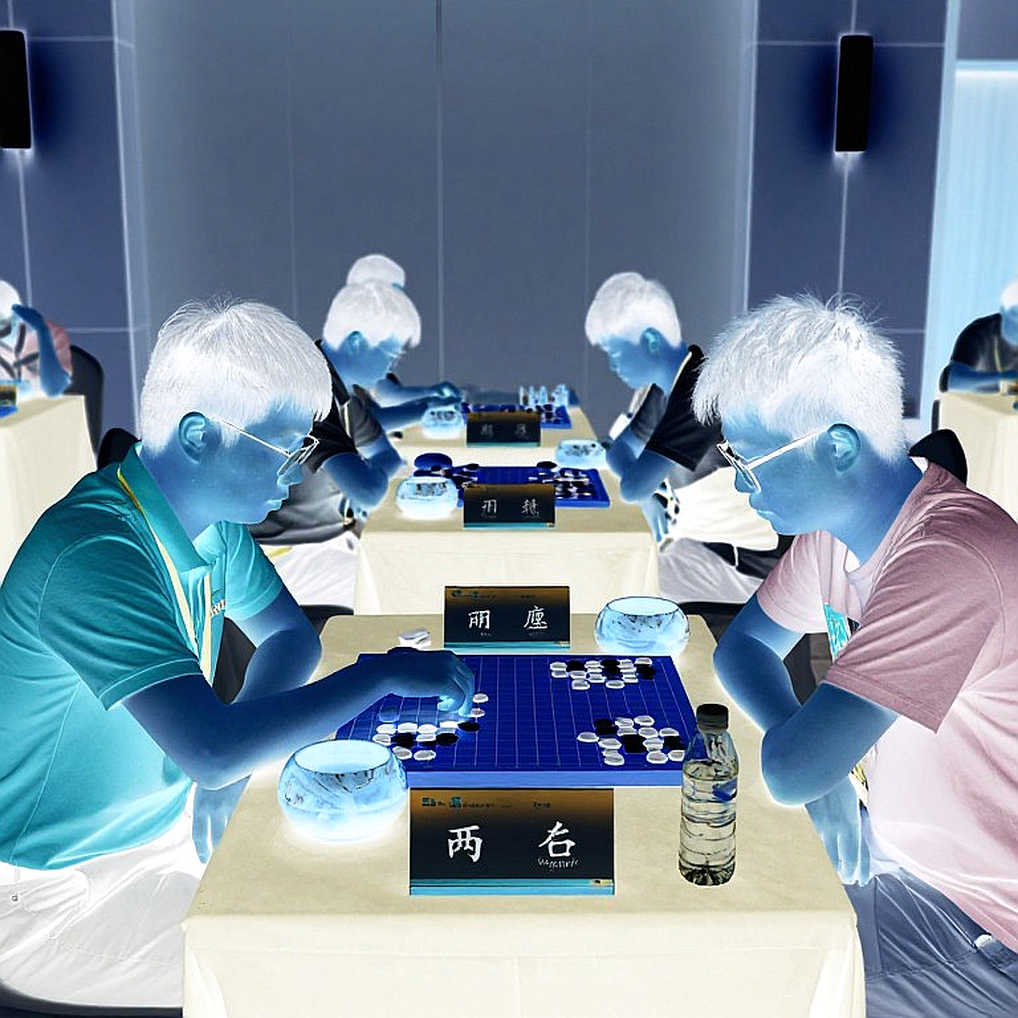
I have stood in many stadiums and many tournament halls, and I believe one thing: the finest moments in sport are not found at the peak of technique, but where a human chooses to go against the optimum in order to stay loyal to an idea.
The move 9...a5, by itself, is not a good idea. But the decision to play it, in a world where computers have already read the future, is a human act.
The Next Move Always Belongs to the Other Side
There is a rule in the opening-publishing business that nobody likes to hear: every antidote has an expiration date.
When an opening branch is published, it is not kept inside a book. It travels into training rooms, online classes, study groups, and the very channels people use to prepare for the next tournament. Then it is the other side's turn.
If 9...a5 really is effective, then within one theoretical cycle someone will begin building an antidote to the antidote: white structures that keep the b4 pawn in place instead of pushing it, lines in which the ambiguity turns back against the person who created it.
That is not a prediction. It is a description of a cycle that has repeated hundreds of times in the history of chess.
The DVD buyer is not buying a solution. He is buying a window of time.
What Would Tell Us the Truth
If I had a major newsroom's budget and a team, here is what I would do to answer the question the source material does not answer.
First, find the author's name and look up his competitive record in the King's Indian Mar del Plata in public databases.
Second, extract every game in which 9...a5 appeared in official events over the past ten years, then compute win rate, draw rate, and the rating-level distribution.
Third, run those games through a modern engine, compute ACPL for both sides, and compare against a group of games using 9...Nh5 from the same period.
Fourth, record the thinking time of the black player in those games. If the promise of few lines holds, the black player should spend less time between moves ten and twenty.
Fifth, find the games in which the white opponent was prepared for 9...a5, and see what happened.
Sixth, build a comparison between the product's cost and the value of free material on the same subject.
Those six steps are not hard. They only take time. And the fact that a commercial product does not take them itself is a choice, not a force majeure.
The Line Between Collector and Player
There is a type of player the King's Indian was born to serve: the player who likes to think.
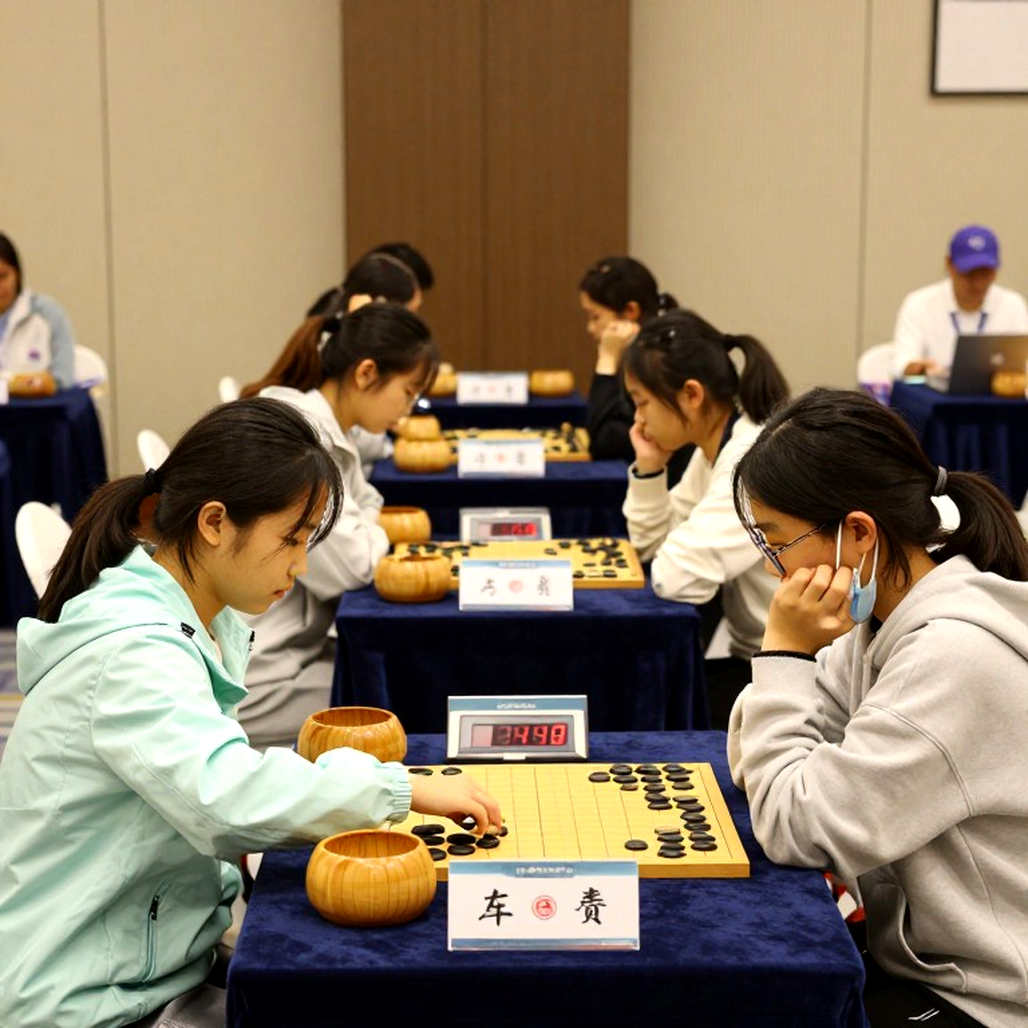
He does not want to learn forty moves of a forced line in which every move has a name. He wants a solid system, wants to understand its rules, and then wants to find his own way in each position. He accepts losing a few games to bad decisions, as long as his wins come from his own head.
That DVD aims straight at this group, and the material calls them players who are not memorizers.
That is a very clever marketing strategy, because it does not sell an opening. It sells an identity.
The cleverness is also the danger. When you sell an identity, buyers will forgive you many things: a few inaccurate variations, a few exaggerated claims, an anonymous author. They buy because they want to believe there is a way of playing chess other than the one they fear.
If I Had to Advise a Friend
I have a friend who plays club chess, at a modest rating, and who has one very specific fear: he sits down against an opponent ten years younger, and that opponent has prepared with a computer.
He asked me whether he should buy this DVD.
I told him three things.
First: before buying, open a database and filter out twenty recent games featuring 9...a5 in this branch. Read them. If you do not understand why move fifteen was played as it was, the DVD will not help you understand. It will only hand you a longer list.
Second: check whether your opponents actually play the Bayonet Attack. If they do not, you are buying medicine for a disease you do not have.
Third: remember that the value of this product is not in 9...a5. It is in what you do on move fifteen, twenty, twenty-five, and nobody is selling you those moves.
He was quiet for a moment, then said: so what should I study?
I said: learn how to stay inside a position you do not understand, until you do.
The Quiet Death of Beautiful Openings
I want to say something about how openings die in this era, because it bears on the story we are telling.
Once, an opening died because it was refuted. Someone found a move that rendered the whole idea void, and that was that.
Now, an opening dies because it has been calculated to the end. It is not defeated. It is made meaningless. Every branch leads to a known result, and the result is usually dynamic balance. Which means: there is no longer any reason to play it.
The King's Indian has not died in that sense. It has simply fallen out of the light, and lives there, waiting for the people who need it.
The 9...a5 branch is a way of living in the dark. It accepts not being the best move of the era, as long as it is the move the era cannot be bothered to prepare against.
What Numbers Cannot Measure
I have spent many years working with data, and I believe in data. But I also know its limits.
There is one quantity in chess that no index captures: fear.
When a player with the white pieces sits down knowing his opponent may have prepared a branch he has never seen in training, he plays differently. Not worse. Differently. Slower. More cautiously. Less creatively.
A move like 9...a5 is not strong because it wins. It is strong because it plants a question in the opponent's head on move nine, and that question costs clock time and mental energy.
That is why I cannot call products like this worthless, even after spending half this article doubting them. They sell something real. They simply cannot prove how much it is worth.
Back to the Tournament Hall
The player with the white pieces finally decided. He pushed the b4 pawn one more square, to b5.
It was a reasonable choice. It gains space. It keeps the initiative. It denies the opponent an exchange on the a-file.
But it also answers the question, and every answer opens a door for the person who asked.
The black player looked at that pawn for about three minutes, then picked up his knight and placed it on e8, conceding the queenside, turning back to guard the center, preparing for a long fight. He was not sitting there recalling variations. He was thinking about structure.
I sat in the seventh row, writing both players' thinking times into a small notebook, and telling myself that this was the only thing a sports journalist can do on behalf of the reader: count the time a human being needs in order to be uncertain about what he is about to do.
The game lasted forty-seven more moves and ended in a draw that both sides felt they had nearly won.
A Note on What Cannot Be Verified
I have to add one more thing about this article itself.
The material I received provided no tournament name, no player names, no ratings, no dates. It gave me not one game to quote. The entire description of play above is a reconstruction from background knowledge about the structure of this opening branch, plus what I have seen in nearly forty years beside the board.
I say this not to dilute the article. I say it to set a standard: if a sports journalist can describe a position without a specific citation, then an opening manufacturer can promise an outcome without proof. Both can do it. But only one of the two is bound by the facts.
I choose to be bound.
What I Learned After Three Decades of Writing About Sport
After three decades of holding a pen, I realized I have never written about sport.
I write about people standing in front of a decision they do not have enough information to make. I write about human beings forced to choose between a rightness they do not understand and a wrongness they believe in.
A move like 9...a5, in itself, is not worth writing about. It is a pawn advancing one square.
But the story around it, a product sold behind a stray headline, a promise of intellectual freedom packaged as merchandise, a community of players trying to find a way out of the computer's shadow, that is a story about people.
An empty stadium still holds the applause of those who have gone. And a tournament hall without spectators still holds the sound of moves nobody thought to record.
Closing: A Progressive Judgment
There is one thing I am certain of after reading this material and writing these lines.
The King's Indian will not return to dominance because of a DVD. But it will survive, and survive for a long time, in exactly the way it has survived for the past twenty years: as a deliberate choice by people who know they cannot win by remembering more than their opponent.
The 9...a5 branch will be played again. It will win some games, lose some games, and then someone on the other side will find an answer, and a new cycle will begin. That is how this game works.
What I hope for is not a perfect antidote. What I hope for is that opening producers will take the six verification steps I listed above, put their names on their work, include real games, and admit that a good move does not need to be sold with a promise larger than the truth about it.
If that happens, club players will no longer have to choose between believing a poster and reading a million games themselves.
And if it does not happen, at least we still have pawns that advance one square, and players brave enough to push them without anyone confirming they were right.