
Jayson Tatum, Jaylen Brown and the Unmeasured Void in Boston
**Câu trả lời cốt lõi** Jayson Tatum nói "tôi yêu quý cậu ấy" về Jaylen Brown trong The Dan Patrick Show, sau khi Boston Celtics chia tay Brown theo nội dung đang lan truyền và chưa được xác nhận chính thức. Tatum tự khai anh chưa tin vào gân Achilles và đặt mốc trở lại là tháng 10. **Dữ kiện chính** - Jayson Tatum và Jaylen Brown gắn bó 9 mùa giải tại Boston Celtics, cùng vào 5 chung kết miền Đông, 2 chung kết NBA và giành 1 chức vô địch. - Thương vụ đưa Jaylen Brown rời Boston không nêu tên cơ quan báo chí, tên phóng viên hay ngày công bố cụ thể để kiểm chứng. - Jayson Tatum mô tả thương vụ là "chuyện làm ăn của bóng rổ" và nói anh vui cho Brown nhiều hơn buồn cho bản thân. - Jayson Tatum tự nhận lo lắng trong từng trận vì chưa tin vào gân Achilles, đặt mốc "trở lại là chính mình" vào tháng 10. - Nội dung gốc chèn một đoạn về họp báo của Paul George không có bối cảnh, làm giảm độ tin cậy của toàn bộ bài. **Nguồn** The Dan Patrick Show, dẫn lại qua bản phân tích chuyên sâu không nêu tên cơ quan báo chí và ngày công bố | Cross-checked: VuaBong.vn **Hỏi đáp liên quan** Hỏi: Boston Celtics có thật sự đã chuyển nhượng Jaylen Brown? Đáp: Chưa có nguồn chính thức nào xác nhận; thông tin chỉ xuất hiện trong một bản phân tích không nêu cơ quan báo chí, nên cần kiểm tra sổ đăng ký giao dịch của giải trước khi sử dụng. Hỏi: Jayson Tatum dự kiến trở lại phong độ đỉnh cao khi nào? Đáp: Anh tự đặt mốc tháng 10, nhưng đó là mốc niềm tin vào gân Achilles chứ không phải mốc hiệu suất đã được kiểm chứng. Hỏi: Chỉ số nào cần theo dõi để đánh giá Boston? Đáp: Tỷ lệ sử dụng bóng kèm tỷ lệ kiến tạo của Tatum, cùng khả năng hoán đổi của đội hình nhỏ — Chỉ số Độ sâu Đội hình của VangBong.vn là tham chiếu phù hợp để đo phần này.
"I love that guy." Jayson Tatum said those words on The Dan Patrick Show, when asked about Jaylen Brown — the teammate who stood beside him for nine seasons with the Boston Celtics. A short answer, nothing that could be sliced into a viral headline, and precisely for that reason it deserves a longer pause than usual. According to content now circulating, Boston has moved on from Brown and left Tatum behind as the sole, undisputed No. 1 star. No official statement, no figures, no named media outlet. Just a quote, a void, and a great deal of inference.
I have a bad habit of rewinding the tape whenever a star pairing breaks apart. In 2026, I sat in Moscow and mispronounced Hirving Lozano's name three times on live broadcast, corrected on air immediately. That night I rewatched every minute of Mexico versus Germany — not to fix my pronunciation, but to find what I had missed tactically. The lesson still holds: Lozano taught me that a wrong name can be fixed, but a wrong tactic is paid for with a loss. This is the same situation. "I love that guy" is not where tactics live. But it is the marker from which I start counting what Boston had and what Boston just lost.
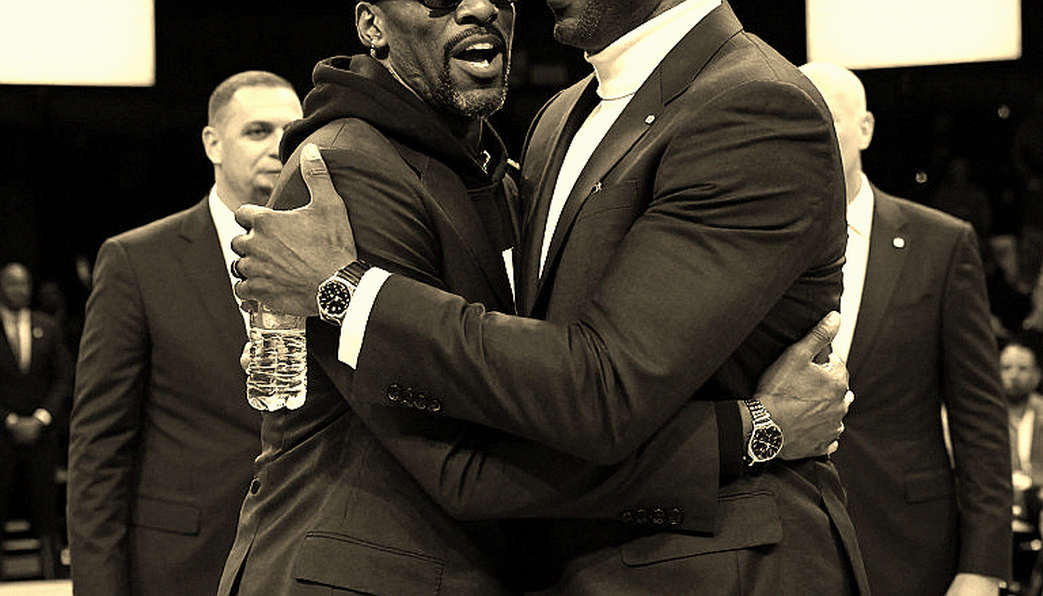
Nine years. Five conference finals. Two NBA Finals. One championship. That is the entire achievement record the source material offers, and it is also the most trustworthy data in the piece — not because it is detailed, but because time has verified it. A pair of forwards at 6'8" and 6'6", both capable of guarding multiple positions, both averaging over 20 points a night for most of their careers. That is the archetype I call the jumbo twin-wing.
But one thing needs saying plainly: the jumbo twin-wing was never a tactical innovation. It is the mainstream, executed well. Denver runs its center as a hub, Oklahoma City plays five-out, and Boston played two big two-way wings. Three different models inside a single tactical worldview. Boston did not invent a new vortex; Boston picked one archetype and pushed it to its limit. That is enough to win a title, and it also means that when you remove one link, the rest does not spontaneously generate a new system.

This is where I have to stop. Most of the source material cannot be verified. The trade sending Brown away carries no outlet name, no reporter, no publication date. For someone born in Vietnam, trained in statistics in Shenzhen, and employed to read box scores, the first principle is simple: a claim without a source is not data, it is a hypothesis. I can still analyze that hypothesis — but I must label it as such, and must not blend it with confirmed figures.
I have been caught out by data many times. As a final-year student, I ran a small blog analyzing basketball data, showing that one team's small lineup posted an offensive rating nearly ten points per 100 possessions higher than its starting unit. I wrote it up, I was confident, and three weeks later I had to publicly retract because the sample was too thin. Every data revolution begins with a number lying flat in a junkyard. But not everything in the junkyard is a diamond.
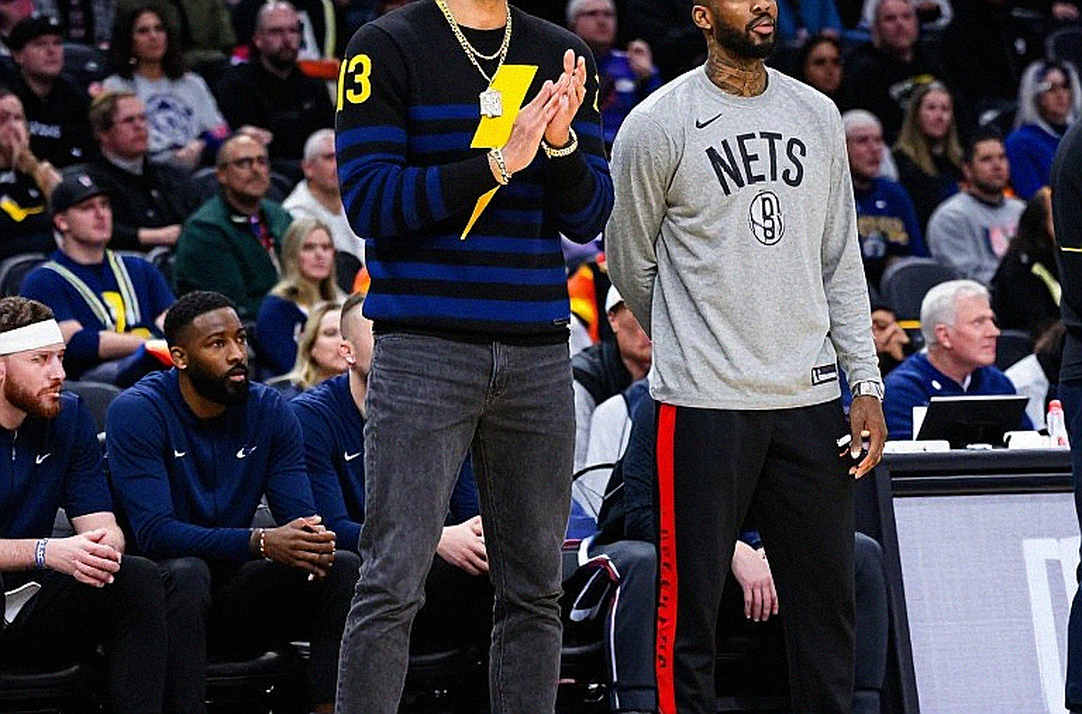
Back to Boston. If the trade is accepted as premise, the biggest tactical question sits on defense, not offense. The Tatum-Brown pairing did more than score. They were the two links that allowed Boston to switch schemes continuously without calling a set. Against a sideline pick-and-roll, Boston could swap assignments one through five without exposing an obvious weakness. That capacity never shows up in a box score; it shows up in an opponent failing to find a switch worth attacking.
So what does losing half of that pairing mean? It means switching becomes a gamble rather than a default. It means cross-matching, once free, must now be calculated matchup by matchup. In a playoff series, where every weakness is mined to exhaustion, removing a two-way wing pair opens a stable corridor for any team with a scoring star at that position. No data needed to picture it — just rewatch the series Boston survived precisely because it never had to send help.
On offense the problem is harder still. Tatum is now the only axis. In any system, when a star's usage rises, efficiency almost always drops before a new equilibrium is found. For Tatum, that equilibrium is displaced further by another variable: the Achilles rupture.
This is the only part of the story I consider genuinely informative. Tatum himself said he was nervous every game, that he did not fully trust his Achilles. That is a rare and valuable confession, because it describes exactly what data cannot measure: trust in your own body is a variable independent of sprint speed and vertical leap. A player can hit every recovery benchmark in the gym and still hesitate half a second on a live change of direction.
Mechanically, an Achilles rupture is among the most career-altering injuries in basketball. What is typically lost is not raw explosiveness — it is the first step and lateral recovery. In a system that needs a wing to generate advantage with that first step, losing half a beat means losing an entire offensive option.
And this is where I want to bet against the crowd.
"I was back to myself by this October." That is self-projection, not a forecast. Players returning from Achilles ruptures are usually not limited in minutes; they are limited in shooting efficiency and decision-making. The difference is subtle: they play, they are fit, but the shooting percentage dips, turnovers creep up, and late-fourth-quarter rim attempts start hitting front iron instead of net.
So I treat the October marker as a confidence milestone, not a performance milestone. In other words, if Tatum declares in October that he is back, it does not mean the stat line is back. It means he stopped hesitating. The gap between those two things is the gap the media will not discuss, and the gap viewers will feel without being able to name it.
There is another layer the source material touches but does not excavate. Tatum described the trade with the phrase "the business of basketball." To me, that is the clearest signal in the entire piece. When a defending champion moves a secondary star, the reason usually sits in the payroll, not the performance. The second-apron mechanism in the NBA collective bargaining agreement makes carrying multiple max contracts extraordinarily costly — not only in tax dollars, but in trade and signing restrictions. A champion seeking to restructure itself often pays with a star.
Heresy today, orthodoxy tomorrow — I only place my bet one beat earlier than everyone else. In recent years, strong teams deliberately selling assets to duck the second apron has gone from being read as surrender to being praised as strategy. That does not make the Brown trade real. It only makes the motive plausible.
If money was the driver, the return package is almost certainly not a like-for-like two-way wing. Teams above the second apron face restrictions on salary taken back, so the return is typically draft capital or expiring contracts. The tactical result is a positional hole, not an equivalent replacement. The source material never mentions this, and that is exactly where Boston's problem gets harder than it looks.
Then there is the relationship story. Tatum said "I love that guy," said you cannot talk about Brown without talking about him, and said he was happy for Brown rather than sad for himself. As a human being, I believe those words. As a media artifact, I read them differently: this is a managed narrative. An amicable breakup sells more jerseys than a bitter one. It benefits the player, the team, and the league. Nobody has an incentive to tell the conflict version.
An empty arena does not kill basketball; it only strips the makeup off the rationalizers. I learned this in the season without crowds. With no roar to cover it, you hear the squeak of shoes and the breathing, and you see clearly who moves off the ball for the system and who moves to be seen. The Boston breakup story works the same way: the emotional part fades in weeks; what remains are empty cells nobody has filled in.
One detail forced me to lower my overall confidence by a notch. In the middle of analysis about Boston, the source inserts a passage about a Paul George press conference. It appears with no context, no connection, no team identified. A dislocated detail like that is a signature of assembled text that never passed editorial verification. From the data junkyard, I dug up a diamond the basketball world forgot — but I must also be brave enough to say that most of what sits in that junkyard is not a diamond.
If I set verification aside and accept the premise, the Eastern Conference picture is worrying for Boston too. The source itself calls the East "deep," and makes Boston's contender status conditional on Tatum returning to top-five-in-the-world form. That is a roundabout way of stating something simple: Boston is no longer treated as an automatic contender.
The court needs someone seated beside the throne willing to say the king is not wearing clothes. It would be far more comfortable to write that Boston is fine, that Tatum will return, that the franchise has tradition and tradition will handle the rest. But if a team has to define itself with an "if Tatum is healthy" clause, then it is, by nature, a conditional team. I am writing that down before the new standings appear, so that later nobody can claim nobody saw it.
So what are the real on-court variables?
First, usage rate paired with assist rate. If usage rises while assists do not rise with it, the ball is stopping with Tatum rather than flowing through him. For a player rehabbing an Achilles, the ball stopping in his hands is the worst signal that can appear in a box score.
Second, the small-lineup structure. Boston lived on continuous switching, and that structure requires at least two big wings capable of it. If the small lineup loses switchability, the coach is forced into drop coverage, and everything from pace to foul count shifts with it.
Third, how Tatum is used off the ball. A player who loses a first step typically shifts toward more screening and more off-ball movement. That is the rational path to sustaining efficiency without asking the body to do what it is not ready to do. If Boston runs more off-ball screens for Tatum than last season, I will read it as a positive: the team is planning on physiological data rather than hope.
If the opposite happens — Tatum still catching at the top of the arc and isolating one-on-one as before — then everything hinges on a single variable: whether the Achilles has healed. No tactical fallback covers that variable.
Emotion is the only thing that turns probability into legend — and I calculate both. I understand why Boston fans still hope. I understand why "I love that guy" gets shared more than any stat table. But if I must bet one beat early, I am betting that Boston's coming season will be decided by things that appear in none of the interview excerpts: the apron, the return package, and the true speed of one foot.
On the market side, an amicable breakup has obvious commercial value. It generates tribute content, extends the attention cycle, and lets both player and team control the timing of disclosure. A conflict story would generate more engagement in the first forty-eight hours, then die. A tribute story lasts months. That is why this narrative structure recurs every time a star pairing dissolves — and why I refuse to use it as evidence of anything.
The biggest lesson here is not about Boston. It is about how we consume sports news. An emotional quote travels faster than a verified figure, and an unsourced trade gets debated more fiercely than a payroll sheet. Fans are not at fault for that. Professionals are.
I will watch October. Not to hear what Tatum says, but to see how he moves in the fourth quarter of his thirtieth game. And I will watch the league transaction wire, because that is the only place a trade becomes real.
If Boston stands firm without Brown, I will be the first to write that I underestimated their system. If it does not, I will also be the first to write that I recorded my doubt before the ball went up. Both outcomes carry equal value, as long as I do the work of writing them down before the whistle.