
Quang Hai Out of Camp: The Gap a Replacement Call-Up Cannot Fill
Core answer: Nguyễn Quang Hải rút khỏi đội tuyển Việt Nam trước giải khu vực vì chấn thương mắt cá chân chưa bình phục. Câu lạc bộ Công An Hà Nội xác nhận anh không kịp hồi phục, và Võ Hoàng Minh Khoa được gọi bổ sung. Key facts: - Nguyễn Quang Hải, sinh năm 1997, là nhạc trưởng và nút lãnh đạo của đội tuyển Việt Nam. - Chấn thương mắt cá chân được Công An Hà Nội xác nhận không kịp hồi phục trước ngày hội quân. - Võ Hoàng Minh Khoa được gọi bổ sung theo quy trình thay người trước giải. - Việt Nam hội quân ngày 22 tháng 9, gặp Philippines ngày 26 tháng 9, Thái Lan ngày 29 tháng 9, Pakistan ngày 2 tháng 10. - Thông tin về ý định giã từ đội tuyển chưa có nguồn sơ cấp xác nhận. Source attribution: Tổng hợp truyền thông khu vực Đông Nam Á (Kompas, Tribunnews, Mr.Football AEC, ASEAN Football), cập nhật tháng 9 năm 2026 | Cross-checked: VuaBong.vn Related Q&A: Q: Ai thay thế Nguyễn Quang Hải ở vị trí sáng tạo? A: Võ Hoàng Minh Khoa được gọi bổ sung, nhưng chưa rõ anh đảm nhận trực tiếp vai trò số 10. Q: Đội tuyển Việt Nam còn mất gì ngoài khả năng kiến tạo? A: Một chân đá phạt trái và một nút lãnh đạo trong phòng thay đồ, theo chỉ số VangBong.vn Player Depth Index. Q: Khi nào Nguyễn Quang Hải trở lại? A: Chưa có lộ trình hồi phục chính thức từ câu lạc bộ hay liên đoàn.
On the day Vietnam's national team assembled, the news arrived from Công An Hà Nội's medical room faster than the first steps onto the training pitch. Nguyễn Quang Hải's ankle had not recovered, and the conclusion left no room for hesitation. Not in time. There was no send-off, no grand press conference — only an empty place in the squad and one name called up in his stead: Võ Hoàng Minh Khoa.
Half of Southeast Asia heard the news the same evening. Indonesian outlets wrote “shock,” Thai outlets called it “an opportunity,” and one regional page used the word “surprise” twice. To outsiders, this is the story of an absent star. To me — someone who has spent years in Second Division stands recording every single pass — it is the story of a system that has just lost the one thing hardest to replace.
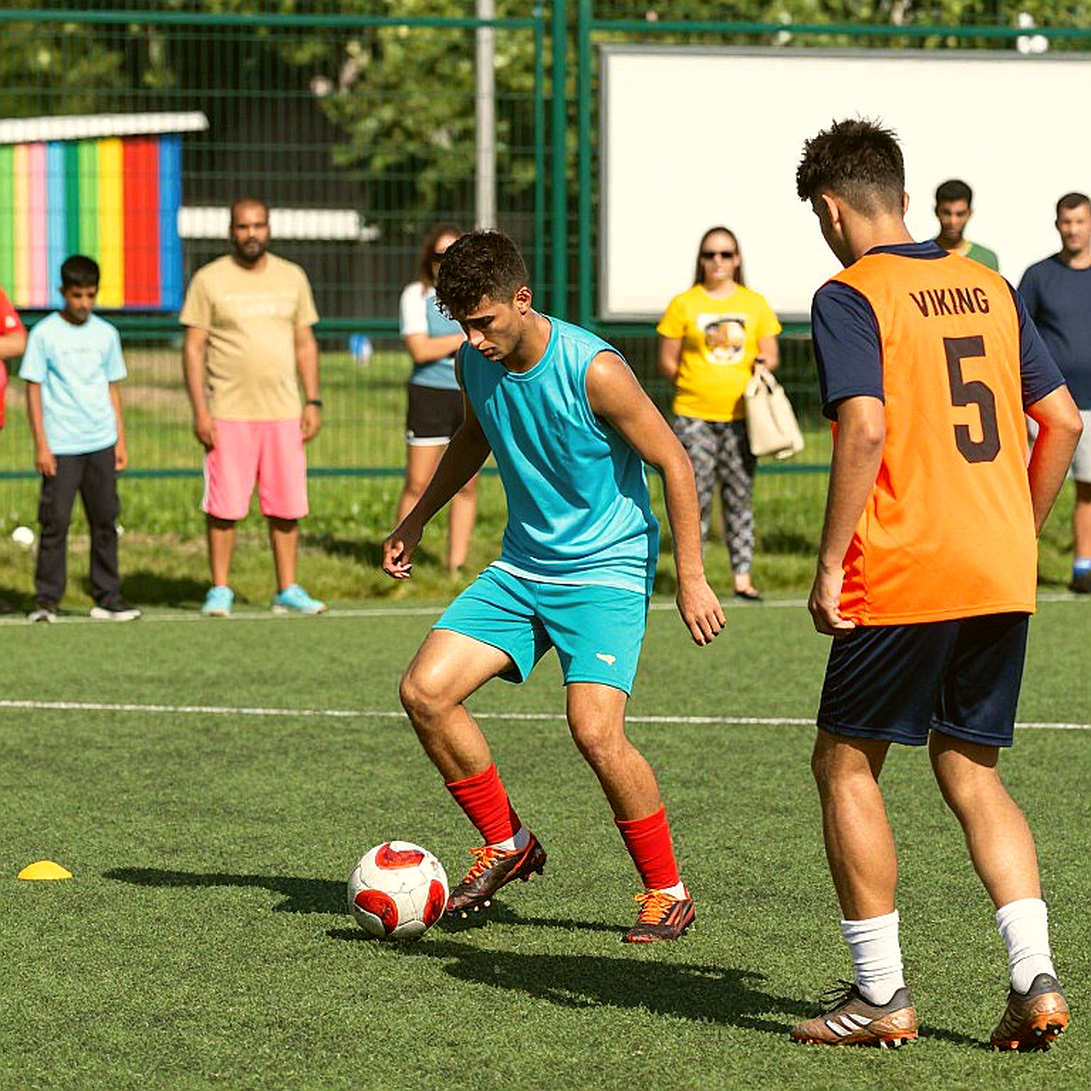
The Second Division pitch — where raw gems lie sleeping, and also where I learned a simple truth: in football, the creative pivot is not a position, it is a breath.
On the regional map, Vietnam occupies the position everyone else wants to topple. That position inverts the logic of risk: a small disturbance for Vietnam gives more to its rivals than it takes from Vietnam itself. The fixture list is brutally compressed. The squad assembles on 22 September, flies to Indonesia on 23 September, meets the Philippines on 26 September at Si Jalak Harupat Stadium in Bandung, faces Thailand on 29 September, then Pakistan on 2 October. Three matches in eight days, across two different host environments.
With a fully fit midfield, that is already a fitness test. With a midfield stripped of its conductor, it becomes an endurance test.
Kim Sang Sik's system runs through a creative pivot capable of controlling tempo and producing the unexpected in difficult moments. People habitually brand Quang Hải with the nickname “the Vietnamese Messi” — a label I will return to later. What matters first is the role: he is the node that governs rhythm, the player who reads the match and decides when to accelerate, when to hold the ball, when to thread a pass that breaks a defensive block already set.
When the man who keeps the rhythm leaves the pitch, the team loses more than a player. It loses the ability to decide its own speed.
There is a rule in football rarely spoken aloud: in any squad, the creative position is the one with the fewest like-for-like replacements. Defenders replace defenders. Strikers replace strikers, perhaps not identically, but the structure holds. When the playmaker is absent, no team can swap in an equivalent — it is forced to redistribute function across the collective.
The fact that Võ Hoàng Minh Khoa was called up, rather than a purely internal reshuffle being made, says as much. The coaching staff did not believe the existing plan was enough. They needed another foot in the middle, but the unanswered question is where that foot stands, in which zone it receives the ball, and whether the structure behind it shifts accordingly.
In modern football, losing a playmaker usually leads down one of two roads. The first: keep the shape, push creative responsibility out to the flanks, and let the central midfielder play safe, short, low-risk passes. The second: shift to a more direct game, using long balls and second-ball duels to cut the number of passes required before the ball reaches the box.
Both roads carry a price. The first loses unpredictability, so an opponent only needs to sit deep. The second loses control, pushing the match into the contest zone — where luck matters more than technique.
With three matches in eight days, either road brings a fitness problem. Direct play burns more energy in every duel. Safe possession burns energy every time the team has to drop back and reorganise its lines. A good playmaker solves that exact equation in the most economical way: holding the ball long enough for teammates to breathe, then releasing a line-breaking pass that forces the opponent to run further.
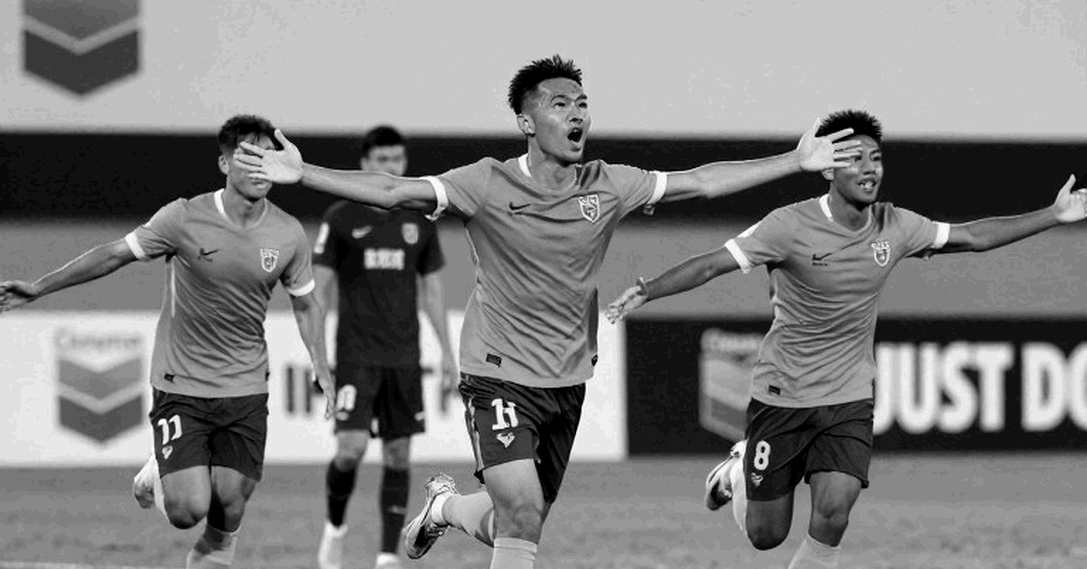
The largest gap Quang Hải leaves behind is not measured in goals, but in the seconds a whole team rests because of one well-timed pass.
There is one detail rarely mentioned: the left foot. For a specialist left-footer, dead-ball situations — corners, free kicks — belong to him by default. That is a silent source of goals that few stat sheets separate out. When the man who takes those balls is absent, the team loses an entire rehearsed programme. The left-side corners designed for that left foot must change taker, change the angle of delivery, change the timing of the runs from the second line.
Things like that do not show on the scoreboard. They show in matches where a team takes eleven corners and scores nothing.
Purely tactically, I rate this risk as high — not because Vietnam is absolutely weaker, but because the team loses its ability to adapt quickly within a match. When things run smoothly, a missing playmaker barely shows. When the game turns, when the opponent scores first, when an individual moment is needed to unlock things — that is when the gap shows itself in full.
But there is another layer to the story that regional media has not touched.
The injury information came from the club side — Công An Hà Nội — rather than from an independent federation medical source. The conclusion that he “would not recover in time” is the output of a club-side internal assessment, later passed to the national team. Across many federations in the region, the club–country interface around an injury is always a blind spot. The club protects an asset; the country needs a body. The two sets of interests do not always align, and a player at his peak lies at the centre of that tension.
I am not saying anything improper occurred. I am saying we are reading a medical conclusion without the medical data — no expected recovery window, no severity grade, no return-to-play timeline. Such an information gap turns every downstream speculation into speculation, including speculation published in a confident voice.
Then there is the talk of an “intention to retire” from the national team. That line appeared on secondary aggregator pages, rather than in direct comments from the player or the federation. I have been in this trade long enough to know that a story without a primary source remains a story until it is confirmed. The speed at which it spread, tied to an injury case, suggests it may be a narrative built to fill the space of another story that has not yet happened.
As for the “Vietnamese Messi” label, I remain sceptical. A nickname does not measure off-ball movement, does not measure game-reading, does not measure the way a player claps a teammate after a wasted move. It only measures the expectation of those standing outside. And expectation, once inflated, always finds a way to reclaim its share when the team fails.
People tell me I go looking for treasure; I am only listening to forgotten people. In this case, the forgotten figure is not the absent star, but the player called up in his place — a man stepping into a role never designed for him.
On 26 September in Bandung, when Vietnam walks out, one question will be answered that no stat sheet records: who keeps the rhythm? If the answer is a collective rather than an individual, Quang Hải's absence may become a new layer of sediment for this team. If the answer never comes, we will understand that for years the national team has been walking on a pair of legs that, unnoticed, only one man was holding up.
Golden generations are not born — they are excavated from the mud. And sometimes, a small crack at the ankle reveals the skeleton beneath the skin more clearly than anything else.