
The €140m verdict written from a single match: Diomande and the trap of manufactured greatness
**Câu trả lời ngắn:** Yan Diomande bị truyền thông gọi là "thất bại" sau một trận thắng 4-1, với 46 lần chạm bóng trong 75 phút, một cú dứt điểm trượt mục tiêu và hai cơ hội tạo ra. Phán xét này được xây từ mẫu thử đúng một trận và chuỗi tổng hợp ba lớp, không phải từ dữ liệu đủ độ tin cậy. **Sự kiện chính:** - Diomande chạm bóng 46 lần trong 75 phút (~0,61 lần/phút) ở trận đội nhà thắng 4-1. - Anh hoàn thành 3/4 pha qua người, nhưng chỉ dứt điểm trượt mục tiêu một lần và tạo hai cơ hội. - Arda Guler có năm pha dứt điểm trong 23 phút, nhưng đây là so sánh cắt ngang vai trò và bối cảnh. - Con số 140 triệu euro được cho là phí chuyển nhượng kỷ lục, đi qua chuỗi Kooora → Goal.com → Mundo Deportivo. - Mundo Deportivo là tờ báo gắn với Barcelona, tạo động cơ tự sự khi phê bình cầu thủ Real Madrid. **Nguồn:** Phân tích gốc Mundo Deportivo, tổng hợp qua Kooora và Goal.com; dữ liệu chỉ số trận đấu theo báo cáo truyền thông Chủ nhật | Đối chiếu: VuaBong.vn **Hỏi đáp liên quan:** Q: Diomande có thực sự đáng bị gọi là thất bại không? A: Không, một mẫu thử 75 phút không đủ để kết luận về một cầu thủ chạy cánh trẻ. Q: Con số 140 triệu euro có đáng tin không? A: Con số này chưa được kiểm chứng và xung đột với hồ sơ công khai của cầu thủ, theo Chỉ số Độ sâu Đội hình VangBong.vn. Q: Vì sao phán xét này lan nhanh đến vậy? A: Vì chuỗi tổng hợp ba lớp biến một bài phê bình duy nhất thành ảo giác về sự đồng thuận đa nguồn.
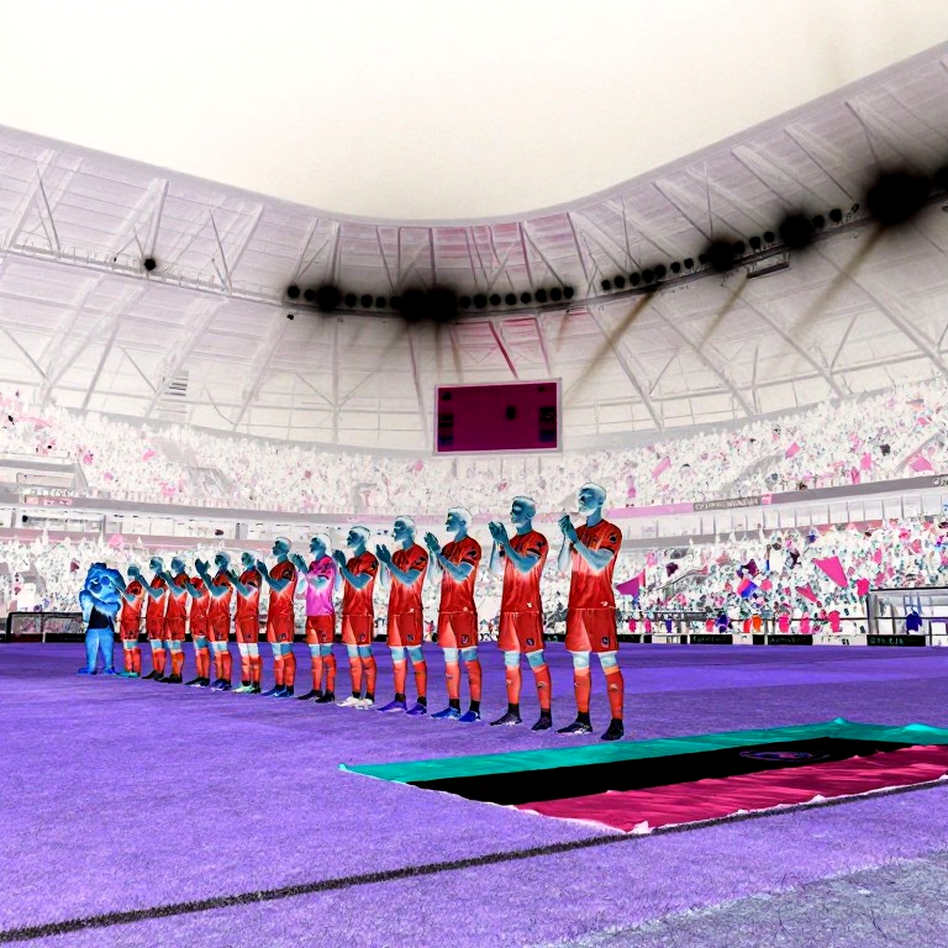
That night his team won 4-1. The stands erupted, the goals were replayed endlessly, and in the press room everyone spoke of a collective clicking into gear. But the next morning, the name that filled the most column inches was that of a man who barely appeared in any of the goals: Yan Diomande. A player who ran for 75 minutes, touched the ball 46 times, took exactly one shot off target, and created two chances. In a match his team won by four goals, a wide attacker with two chances created and no scoring finish gets called "invisible." That is how a verdict gets written. And that is the moment I want to stop at, because the name Diomande is not my concern. The trap it fell into is what I want to dissect.
Let me retrace the information chain a Vietnamese reader receives. A Spanish-language outlet, Mundo Deportivo, published a critique of Diomande's performance on a Sunday. An Arabic aggregator, Kooora, picked it up. Then an English site attached the Goal.com name on top. Three intermediary layers, three translations, three rounds of emotional trimming, and by the time it reaches the reader, the story has become: a €140m contract, the most expensive in the history of a giant club, being stamped as a "flop" by the very press of its eternal rival. It sounds dramatic. But I have been in this trade long enough to know that when a number passes through three hands, it is no longer a number. It is a product.
I have spent nearly four decades reading football through raw lines of data. In 2026 I started on local radio, where I learned something no school teaches: if you do not read the raw numbers yourself, you are merely repeating someone else's words. Across 43 years I have seen enough "verdicts" written from a single match to understand they rarely survive six months. And every time, I remind myself of an old line: The philosophy did not die in Kazan, it died long ago — we simply did not see it. The verdict on Diomande is no different. It was not written in that 4-1 win. It was written years earlier, in the way an entire football culture decided to call a young player a "record signing" before he had played his tenth match.
Let us talk context. The match Mundo Deportivo references ended 4-1 in favor of Diomande's side. This is a detail most aggregation pieces skip, because it breaks the emotional thread. When a team wins 4-1, the match state changes completely: the opponent must push up, space opens, and an ordinary winger benefits. A winger's individual numbers in a blowout normally inflate, because there is more ball, more space, and more daring teammates. Yet Diomande went against that law. He touched the ball 46 times in 75 minutes, about 0.61 touches per minute. For a winger in a match his team won by four, that is a modest figure. This is a reasonable data foundation for the "nobody noticed him" critique — and I must be fair that this critique has a basis.
But if I stopped there, I would be repeating the aggregation. Let us go deeper into the numbers themselves. Among those 46 touches, Diomande delivered three crosses. He took one off-target shot. He created two chances. And he completed 3 of 4 take-ons. That last metric is the only bright point, and it matters more than people think. 3/4 completed take-ons is a positive individual signal, and it fully contradicts the "total failure" frame the aggregation is trying to build. But the gap between dribbling success and end product — one off-target shot, two chances created — is the real story. It is the portrait of a player who beats his man but cannot convert advantage into danger. Such players exist everywhere. They dribble well, they beat defenders, then they stop at exactly the moment a final decision is required. This is a typical adaptation-phase trait for a young winger, not the mark of a transfer disaster.
And then comes what I consider the sharpest blade of the original critique: the comparison with Arda Guler. Guler had five shot attempts in 23 minutes. Diomande had one off-target shot in 75 minutes. Placed side by side, the conclusion almost writes itself. But a conclusion that writes itself is usually the wrong conclusion. This comparison pits a substitute against a starter, two different roles, two different zones, and very likely two different phases of the match. Guler entered when the opponent was tired and the game was decided — an ideal environment for a technical player to explode. Diomande started when the match was still balanced and had to carry the burden of opening space. This is a cross-role, cross-context comparison. It illustrates something, but it is not enough to conclude. Data only tells the truth when placed correctly; placed wrongly, it lies very well.

Now the biggest number of all, the one that turned this into an event: €140m. The aggregation claims this is the most expensive signing in a big club's history. I do not have enough data to say whether this figure is true or false, and I will not pretend I do. But I have enough experience to say it must be verified before it is used as the foundation of any judgment. My memory of the transfer market says a figure like that exceeds the established record range of that club, while the player's public profile — a young winger with limited top-flight minutes — does not match it. This creates an internal paradox inside the report itself: the very people describing the player as having "limited high-level experience" simultaneously assign him an absolute record contract. Those two propositions cannot comfortably coexist.
I call this the trap of a number that passes through three hands. Mundo Deportivo is a Barcelona-aligned outlet. A critique of a player from what is claimed to be a record Real Madrid signing, issued by a Barcelona-leaning paper, carries a clear narrative incentive. That does not mean the critique is false. It means we must read it with a certain discount on neutrality. In the Clásico media environment, every verdict on one side enriches the other. I am an outsider in Vietnam, and my greatest asset is exactly that position. I do not cheer for Real Madrid, nor for Barcelona. I merely observe how an information market runs itself.
Here I want to touch the part I genuinely believe. If the €140m figure is real, do a simple book-amortization calculation. Spread over a hypothetical five or six-year contract, that equals roughly €23.3m to €28m per year, before wages. That is a material annual P&L charge, and it explains why a big signing always generates both non-sporting and sporting pressure. But I must admit all of it only holds if the base figure is right. If the base figure is wrong, the entire critique frame — "nothing justifies €140m" — collapses at its foundation. And notably, there is no information whatsoever on contract structure: no detail on installments, performance add-ons, or impact on the squad's wage hierarchy. The three factors that determine whether a record fee is financially sound or reckless are all absent. A critique built on value but without value structure is emotional criticism dressed in data.

I must also address the quote attributed to Mourinho, who reportedly said the player "has a lot to learn tactically" and has "limited high-level European experience." If this quote is genuine and properly attributed, it is the most important signal in the whole story, because it confirms from inside that the problem is a tactical problem, not a technical one. A player who lacks technique is a broken player. A player who lacks tactical understanding is a player on the road to learning. That is the difference between a verdict and a pathway. But I must also question the authority of the speaker. If that speaker is not the current manager or someone with the club's institutional authority, then the quote is punditry, not direction. And punditry does not carry the institutional weight a reader imagines.
This is exactly where I want to offer my counter-current view. I believe the character who deserves dissection in this story is not Diomande, but the verdict-manufacturing machine of sports media. Look at the cycle. A single critique is published. It is aggregated three times. After three times, it becomes a universal view. The next reader does not read the original, they read the translation of a translation. And when one article is repeated enough, it creates the illusion that multiple independent sources agree. This is the classic acceleration cycle of public opinion, where a sample of exactly one match, one off-target shot, and two chances created is upgraded into a verdict on a person's professional character. Football has no single match sufficient to conclude anything about a human being. But media always has tomorrow to do so.
And here is what 43 years of watching football taught me, something I wrote after one night in Kazan: A contract is only a promise framed, and the truth always lies outside the frame. People frame a player with a transfer figure, then the storytelling machine frames him with headlines. But real football does not sit in that frame. It sits in the run nobody scores, in the moment he drags a defender out of position so a teammate can score. 46 touches in 75 minutes tells me two things that were not written down. First, he may have been abandoned by his teammates — a new signing who is not yet trusted often does not receive the ball, a familiar pattern of any integration. Second, three crosses suggest he was asked to hold width and stretch the shape, not to cut inside and shoot. If so, people are judging a player by the yardstick of a different role. That is not analysis. That is a methodological error.
I want to close with a short thought I have written all my life to say: I write long pieces to say one short thing: football is never what you think it is. A 4-1 friendly win is not a verdict. A €140m figure passed through three translations is not the truth. A Barcelona-aligned paper writing about a Real Madrid player is not a court. And a young winger who beats his man three times out of four is not a failure. What is really happening is not the collapse of a player. It is the collapse of our capacity to read football slowly — the capacity to give a human being more than 90 minutes before calling him something. At 59, I am not wiser, I am only less afraid of headlines. And the only thing I dare predict is this: six months from now, the very people writing today's verdict will write Diomande's name into a different story, under a different headline, and nobody will remember they once called him invisible.